As a devoted pet owner, I’ve often seen my dog, Max, shake and pace after a vet visit. This behavior worried me, showing me pets can feel stress too. It made me start learning about pet stress and how to help.
Pets, like us, can get stressed from loud noises or sudden changes. Helping them with stress can make them healthier and our bond stronger. Finding ways to reduce stress can make pets happier and more relaxed.
Key Takeaways
- Recognizing signs of pet stress is key for their health.
- Common stressors include environmental changes and loud noises.
- Creating a calm space helps with stress relief.
- Regular exercise boosts pet happiness.
- Seeing a vet is important for serious stress issues.
- Calming products can really help anxious pets.
Understanding Pet Stress and Its Causes
Knowing why pets get stressed is key for any pet owner. Many things can make pets anxious, like changes in their home or family. Even small changes, like a new pet or a different daily routine, can upset them.
It’s important to know what stresses pets out. This helps keep them happy and healthy.
Common Stress Triggers for Pets
Pets can get really anxious in certain situations. Loud noises, like thunderstorms, can really scare them. Even going to the vet can be stressful, if they don’t like it.
Even small things, like a new face at home or a different meal time, can stress them out. Knowing what stresses pets helps us make them feel better.
Keeping a regular routine is important for pets. They like knowing what to expect, like when to eat or go for a walk. A safe and predictable home helps them feel secure.
By paying attention to what stresses pets, we can help them feel better. This makes their lives happier and healthier.
Signs of Pet Stress
Knowing the signs of pet stress is key for any pet owner. Pets show physical and behavioral changes when they’re anxious. Dogs might pace, bark a lot, whine, or stay away from people. They could also twitch their ears or change how they stand, showing they’re not comfortable.
Cats might groom too much or hide in places they know well. These signs show they’re feeling anxious.

Spotting these stress signs early helps prevent bigger problems. For example, if a pet stops eating, it might be stressed. Changes in body language, like hard eyes or a tense posture, are also important signs.
By watching for these changes, we can meet our pets’ needs quickly. This helps keep them calm and happy. It makes our homes happier places for everyone.
How to Ease Your Pet’s Stress
As a pet owner, I’ve learned that easing pet stress needs a few steps. Creating a calm space is key to making my pets feel secure. Physical and mental activities also boost their happiness. Calming products can be a big help, too, during tough times.
Creating a Calming Environment
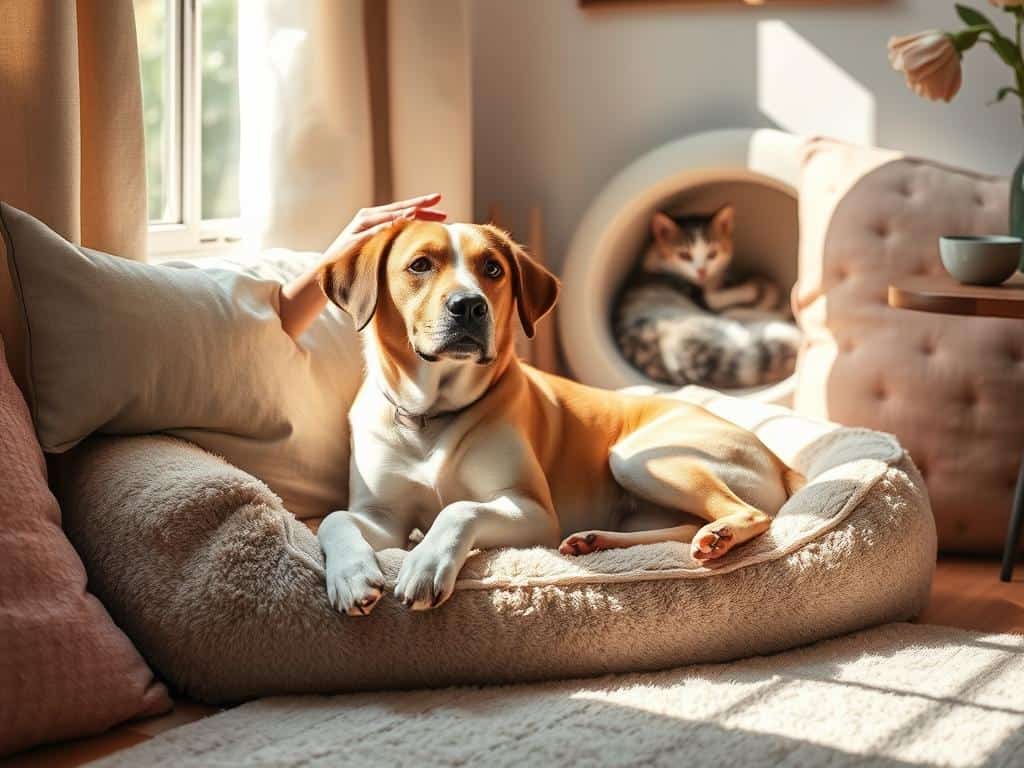
A calm home is vital for pets. I ensure my home has quiet spots for them to hide when stressed. These areas have cozy beds and soft blankets for comfort.
Using pheromone diffusers, like Feliway for cats, helps a lot. They mimic natural scents, making the home feel peaceful for my pets.
Physical and Mental Activities
Keeping pets active is great for stress relief. Walks, play, and games release happy hormones. I’ve seen how regular routines help, reducing anxiety in cats.
Stimulating toys also keep boredom at bay, preventing bad behavior. This makes them happier overall.
Using Calming Products
Discovering calming products has been a game-changer for me. Compression wraps, like ThunderShirt, apply gentle pressure and calm pets. I also use natural supplements, but always check with a vet first.
Calming music from iCalmDog adds to the relaxation, easing anxiety during stressful times.
Conclusion
Recognizing and managing pet stress is key to keeping my pets happy and healthy. This article has covered the reasons and signs of pet stress. It shows how important it is to tackle these issues for my pets’ happiness.
Creating a calm space and keeping my pets active helps a lot. It reduces their stress and improves their life quality. Using calming products also helps with anxiety, making it vital to tackle pet stress from all angles.
This approach not only boosts their emotional health but also strengthens our bond. By focusing on their needs and understanding their stress, I help keep them healthy and happy.
As I learn more about pet care, I see that a happy pet is a healthy pet. Making sure they are emotionally and physically well is a shared joy for both of us.
















+ There are no comments
Add yours