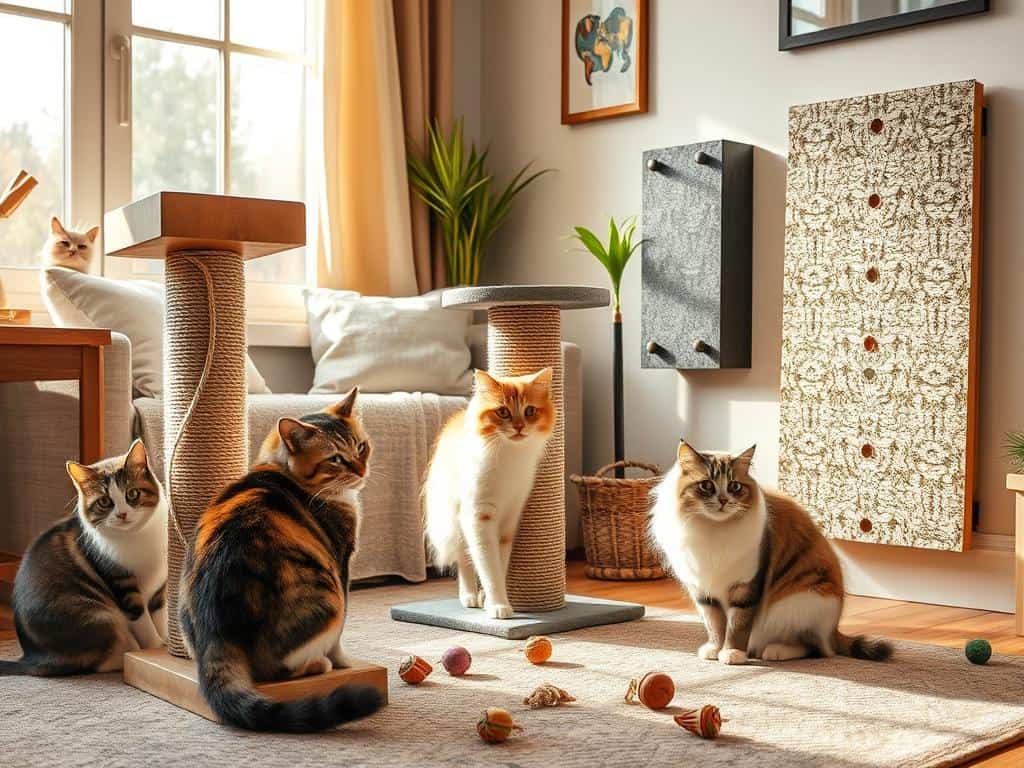
As a cat owner, I’ve faced many challenges, but one stands out: my cat’s constant scratching. I remember a day when I came home to find my new sofa covered in claw marks. It looked like an artwork of destruction.
It felt like I’d spent a fortune for my cat to turn my living room into their playground. But I soon realized scratching is essential for their health and well-being. I learned to adjust my expectations and find effective solutions to keep my furniture safe and my cat happy.
Key Takeaways
- Scratching behaviors can begin as early as 8 weeks of age.
- Cats typically prefer to scratch sturdy items, like carpet.
- Multiple scratching posts increase the chances of success in redirecting their behaviors.
- Close placement of scratching posts fosters a sense of safety for social cats.
- Anxiety may contribute to excessive scratching, potentially requiring vet intervention.
- Cats release pheromones to mark territory, which can be mimicked to help deter unwanted scratching.
Understanding Cat Behavior and the Need to Scratch
It’s key to understand why my cat scratches. Cats start scratching early, around 8 weeks old. This behavior keeps them physically and mentally healthy. Knowing why they scratch helps me stop them from scratching my furniture.
Why Do Cats Scratch Furniture?
Cats scratch furniture for many reasons. One reason is to keep their claws in good shape by shedding old nail sheaths. Furniture’s vertical surface is perfect for them to stretch and use their muscles.
Scratching also lets them mark their territory. Their paws have scent glands that release pheromones. This way, they tell other cats they’re there, feeling safe.
Why Do Cats Scratch the Floor or Carpet?
My cat scratches the floor or carpet because it’s stable. Horizontal surfaces give them a good grip for scratching. It also lets them stretch and get stronger.
Knowing how different surfaces affect their behavior helps me manage scratching better.
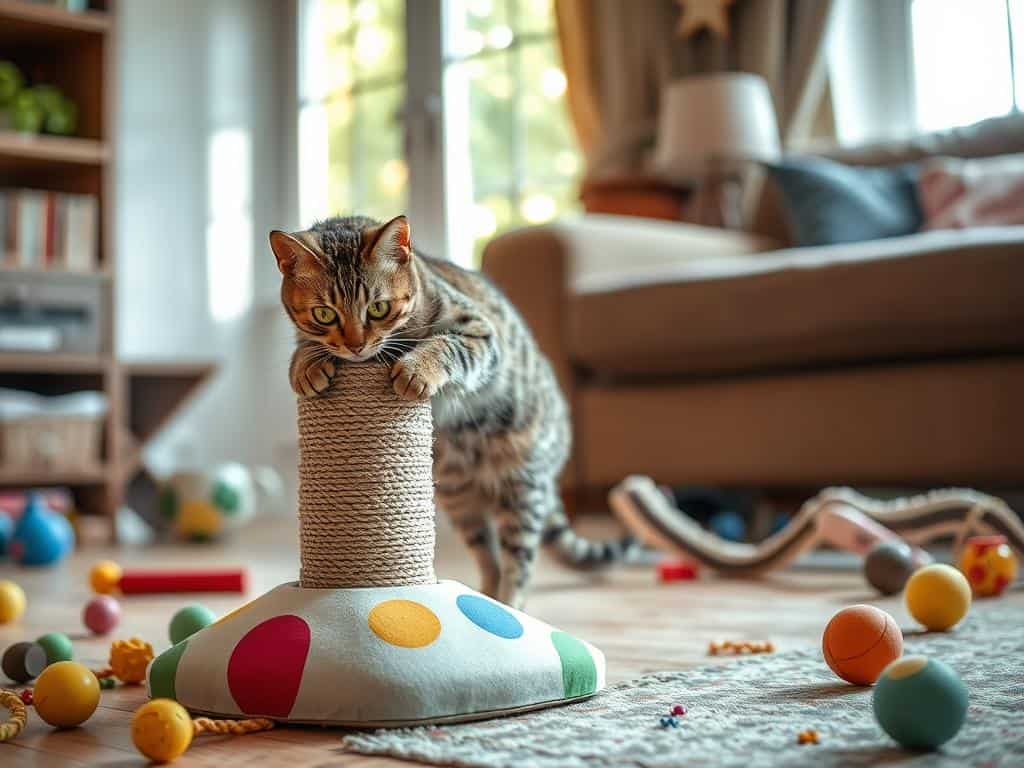
Cat Scratching Solutions to Protect Your Furniture
Protecting my furniture from my cat’s scratching requires smart strategies. Giving them the right scratching spots is key.
Provide Appropriate Scratching Alternatives
Choosing the right scratching spots is vital. Cats like rough surfaces for scratching. This helps them exercise their claws and relax.
The texture and material of the scratching post matter a lot. It should be appealing and satisfying for my cat.
Optimal Placement of Scratching Posts
Where I place the scratching posts is important. I should put them where my cat likes to hang out. This makes it easier for them to find the right spot to scratch.
Training Techniques to Redirect Scratching
Using positive training techniques helps redirect my cat’s scratching. Rewarding them with praise or catnip for using the post encourages good behavior. Avoiding punishment is important to prevent fear and mistrust.
Creating an environment that supports good scratching habits is essential. It helps balance my cat’s natural behavior with protecting my home.
Conclusion
Understanding cat behavior is key to solving scratching problems. Knowing that scratching is natural and healthy for cats helps me find good solutions. I can use scratching posts made from materials like sisal or cardboard to meet their needs without damaging furniture.
Placing scratching posts in the right spots and using training helps cats scratch where they should. Positive reinforcement works well, with over 71% of cats responding positively. Keeping their claws trimmed also helps, reducing furniture damage by 50%.
With the right approach, I can help my cat scratch in a way that’s good for both of us. This way, I protect my home and make sure my cat stays happy and healthy.
















+ There are no comments
Add yours