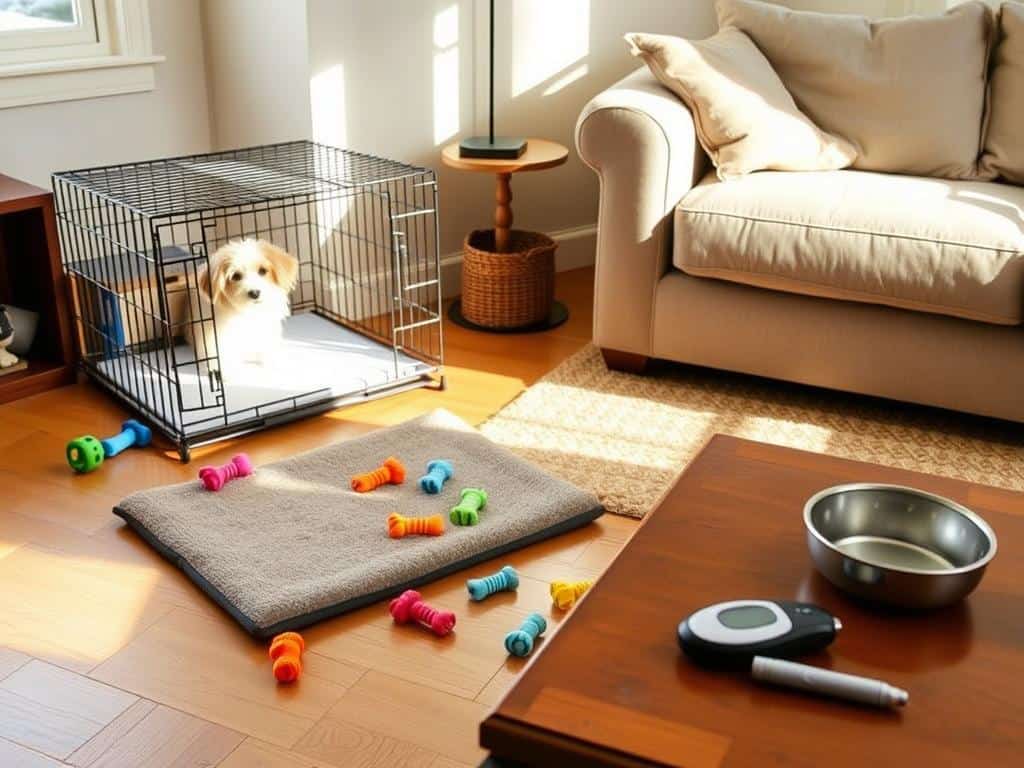
Getting a new puppy is exciting but also a big challenge. I remember when I brought Luna, my golden retriever, home. The first few nights were tough, with lots of accidents.
But I soon found out that housetraining doesn’t have to be hard. With a good plan and some quick tips, it can be easy and stress-free.
Setting up a routine for bathroom breaks was key. Puppies can hold their bladder for about an hour for every month of age. So, Luna, being three months old, could go for three hours.
I took her outside every two hours. When she went potty outside, I praised her. This made her happy and helped her learn good habits.
In the next parts, I’ll share strategies and insights that helped me with potty training. We’ll tackle common challenges and celebrate our wins. This way, you and your puppy can start a happy, healthy routine together.
Key Takeaways
- Puppies typically control their bladder for about one hour for every month of age.
- Establishing and maintaining a routine with bathroom breaks every two hours is key for training.
- Rewarding your puppy right after they go potty outside helps them learn good behavior.
- Keeping feeding times regular helps teach puppies to go at set times.
- Puppy housetraining usually takes 4-6 months to master.
Understanding the Importance of Puppy Housetraining
Setting up a routine for puppy housetraining is key for both pet owners and their pets. It makes the process easier and keeps your home clean. A well-trained puppy strengthens your bond and keeps your home safe and comfy.
Why Potty Training is Essential for You and Your Puppy
Potty training is vital for keeping your home clean and your pet healthy. It teaches puppies where and when to go, avoiding accidents. Knowing when to take your puppy out is important. They need to go in the morning, at night, and after playing.
The Benefits of Proper Pet Hygiene
Keeping your pet clean is important for a healthy home. A clean home is better for both pets and people. Cleaning up after your puppy makes your home more enjoyable.
Good hygiene during housetraining also helps build a strong bond with your puppy. It builds trust and communication, essential for a great relationship.
Effective Strategies for Puppy Housetraining
Housetraining a puppy requires effective strategies. Establishing a routine is key. I take my puppy out regularly, after meals or naps, to reinforce good behavior. This helps with bladder control and learning.
Puppies under 12 weeks need to go out every one to two hours. Older puppies can hold it for hours equal to their age in months plus one. For example, a four-month-old puppy can hold it for about five hours.
Establishing a Routine: Setting the Stage for Success
Consistency is key when housetraining a puppy. Regular feeding times help track potty patterns. I take my puppy outside promptly when he shows he needs to go.
Leashes help keep focus during these breaks. When I’m busy, I crate my puppy to prevent accidents. This reinforces good habits.
Positive Reinforcement: Celebrating Every Success
Positive reinforcement is vital in housetraining. I praise and reward my puppy for going in the right spot. This makes training fun for both of us.
Scolding for accidents doesn’t help. Instead, I clean up with enzymatic cleaners to prevent future mistakes. Following these tips can lead to reliable potty habits in a week or two.
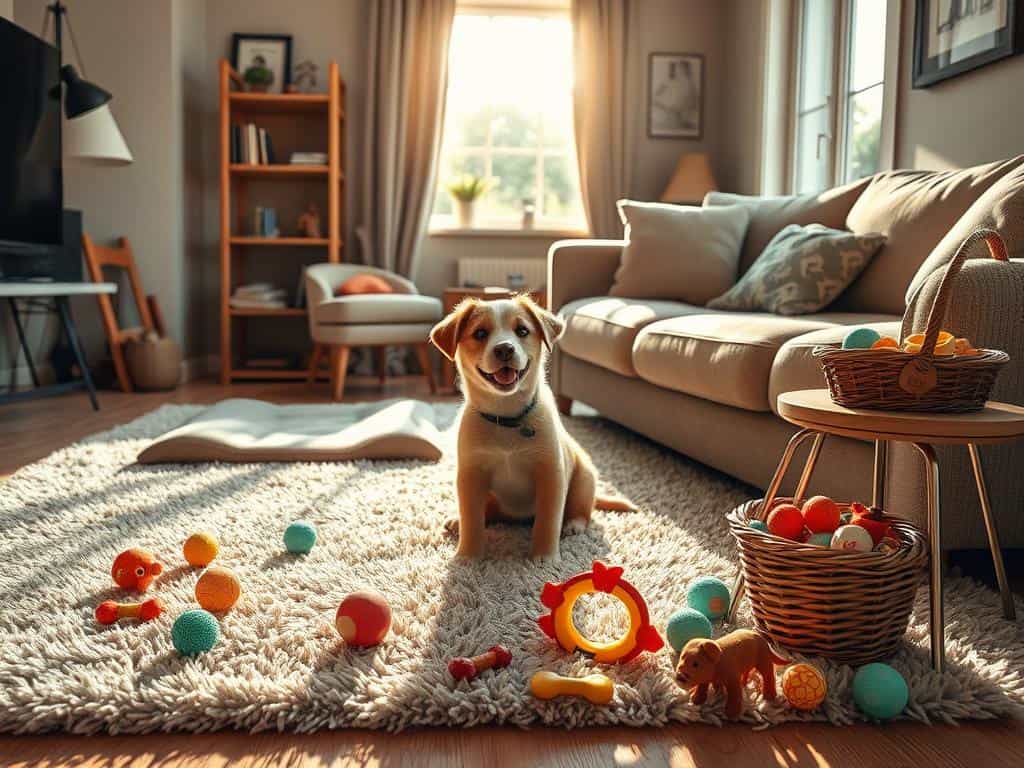
Common Housetraining Challenges and Solutions
Working with puppies, I face common housetraining challenges. These can seem tough but are really doable. It’s key to know how to handle accidents and behavioral issues in puppies.
Each problem is a chance to grow, if we stay patient and consistent. This approach helps both the owner and the puppy.
Accidents Happen: Understanding and Handling Them
Accidents are normal, even in the first few weeks. Puppies need potty breaks often, depending on their age and breed. It’s important to know how to handle these accidents well.
Instead of scolding, it’s better to redirect the puppy’s behavior. Cleaning up after an accident needs careful attention. I clean up at least three times to remove all smells, as dogs have a better sense of smell than humans.
Addressing Behavioral Issues: What to Avoid During Training
Dealing with behavioral issues in puppies requires watching them closely. I avoid using too much confinement or punishment, as it can cause anxiety. A caring training environment helps puppies grow well.
Using timers or alarms for potty breaks and the right crate size helps a lot. Consistent methods like tethering or gating teach puppies about boundaries. Solutions that focus on positive reinforcement make training easier and more fun.
Conclusion
Puppy housetraining might seem tough at first, but it’s doable with the right steps. I learned this from my own experience with James. A consistent routine and positive reinforcement are key to quick results.
When James went outside correctly, I praised him right away. This made a big difference in his learning.
Creating a supportive and structured environment is key, just like with my daughter. This approach not only improves training but also strengthens the bond between you and your puppy. This bond is essential for your puppy’s comfort and confidence during training.
In short, patience and consistency are vital in puppy housetraining. Even with setbacks, focusing on positive training and rewards helps your puppy grow. I’m sure any dedicated pet owner can overcome the challenges and enjoy a well-trained companion soon.












+ There are no comments
Add yours