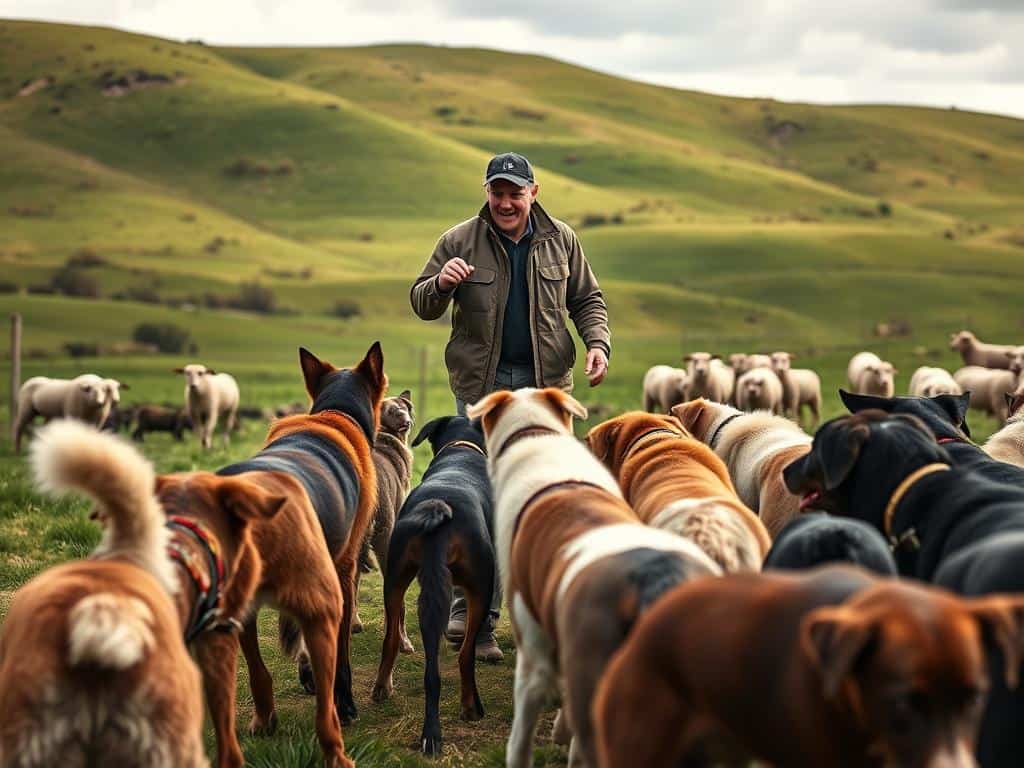
As an Australian Shepherd owner, I quickly fell in love with herding dog training. My first training session was eye-opening. The energy and smarts of these dogs amazed me. It was like watching a dance, with handlers and dogs working together perfectly.
This showed me the beauty of training. It’s not just about giving commands. It’s about building a strong partnership based on trust and understanding. With over 30 herding breeds, each has its own special traits. These can make training easier or harder.
In this article, I’ll share my knowledge and simple steps for training herding dogs. I want to help you and your dog succeed, whether at home or outdoors.
Key Takeaways
- Understanding the foundational instincts of herding dogs is key for training.
- Basic commands like “come,” “sit,” and “stay” are important first steps.
- Short training sessions help keep your dog focused and avoid fatigue.
- Knowing each breed’s quirks can help you tailor your training approach.
- Building a partnership based on respect and clear communication is vital for success.
Understanding the Foundations of Herding Dog Training
Building a strong base for herding dog training is key. It helps us work with these smart and quick animals. We need to understand leadership, respect, and boundaries to train them well.
Emphasizing Leadership and Teamwork
Being a leader through teamwork is the best way. A handler should guide their dog, using their natural herding skills. This teamwork makes training better and strengthens the bond between handler and dog.
The Importance of Mutual Respect
Mutual respect is essential in herding dog training. Handlers must respect the dog’s speed, stamina, and instinct for livestock. This respect builds trust and helps in learning.
Handlers also need to earn their dog’s respect. They do this by being consistent and setting clear rules. This respect is the foundation of a good training partnership.
Setting Boundaries for Training Success
Setting and keeping boundaries is key to success. Basic commands like “Here” and “Down” are the start of obedience. These commands must be followed always, even when there are distractions.
Keeping these standards throughout a dog’s life is important. Clear boundaries help both the trainer and the dog stay focused. This reduces confusion and makes training easier.
Starting Your Herding Dog Training Journey
Starting to train herding dogs needs careful planning and prep. Knowing the selection criteria for herding breeds is key for success. Breeds like Border Collies, Australian Shepherds, and Belgian Malinois have special traits and energy levels. These can impact their performance in herding.
When picking a breed, think about your experience and the dog’s fit for certain tasks. This knowledge is vital for effective training and managing the dog’s instincts.
Selecting the Right Herding Breed
Choosing the right herding breed is critical for training success. Each breed has its own herding skills and temperament. Beginners might want breeds with lower energy or easier training backgrounds.
Working with breeds known for their herding abilities helps align training goals. It also creates a better environment for learning.
Preparing Your Dog for Training
Before starting training, make sure your dog is ready. This means checking their dog health with vet visits and giving them mental stimulation. The best training age is between 10 to 12 months, when they’re mature enough.
Fixing any confidence issues early helps with learning and improves herding performance.
Introducing Basic Commands
Teaching basic commands is the base of herding dog training. Commands like “come,” “sit,” “lie down,” and “stay” are key for obedience. Adding herding commands like “come bye” and “away” early on boosts herding skills.
Regular practice and positive reinforcement build trust and understanding. These are essential for moving on to more complex herding tasks.
Advanced Techniques in Herding Dog Training
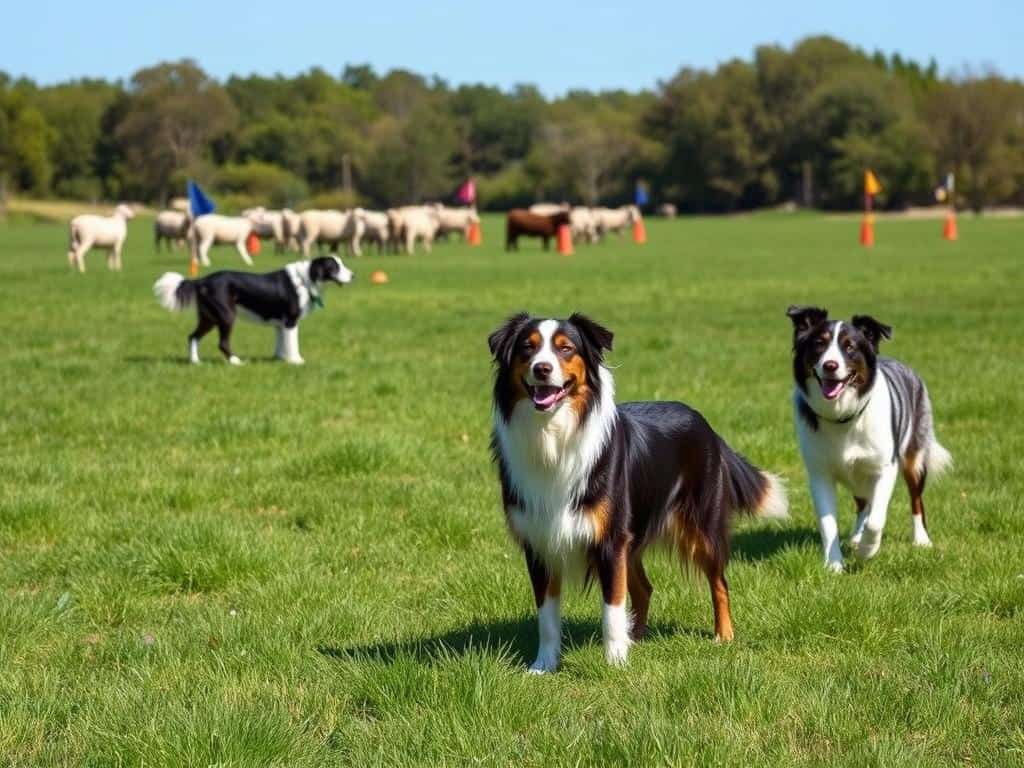
Mastering herding dog training requires advanced techniques. These methods improve the effectiveness of my training. I focus on teaching directional movements and helping dogs get used to livestock.
By learning specialized skills, my dogs can perform at their best. This is key for successful herding activities.
Developing Directional Movements
After teaching basic commands, I work on directional movements. I teach my dog commands like “come bye” and “away.” Using leashes helps guide the dog and improve control.
Regular practice makes my dog more responsive. This opens the door to more advanced techniques in training.
Working with Livestock: Acclimation and Practice
Livestock acclimation is a key part of training herding dogs. I start by introducing my dog to calm animals in a safe place. This helps my dog stay positive and focused.
Keeping safety in mind is important. It prevents injuries and helps us move forward in training. My goal is to make my dog comfortable and skilled in herding.
Utilizing Signals for Effective Communication
Good communication is essential with herding dogs. I teach my dog to recognize training signals like hand gestures and whistles. These signals help my dog understand and react to commands.
Practicing these cues regularly strengthens our bond. It also makes our herding activities more efficient, whether we’re just practicing or competing.
Conclusion
Looking back on my herding dog training, I see that patience, clear communication, and understanding each dog’s nature are key. Moving from simple commands to complex ones strengthens the bond between dog and handler. This bond is vital for farm work and winning competitions.
Every dog, like Border Collies, Australian Shepherds, or Belgian Malinois, has its own pace and challenges. It’s important to see and respect these differences.
Knowing the special traits of herding breeds helps a lot. Age, socialization, and the handler’s experience affect how fast a dog learns. Adding agility training improves a dog’s physical and mental skills, even without livestock.
In my last thoughts, sticking to the advice in this article helps both new and seasoned trainers. Herding dog training is more than teaching commands. It’s about building trust, communication, and respect. This leads to a loyal and skilled partner in the field.

















+ There are no comments
Add yours