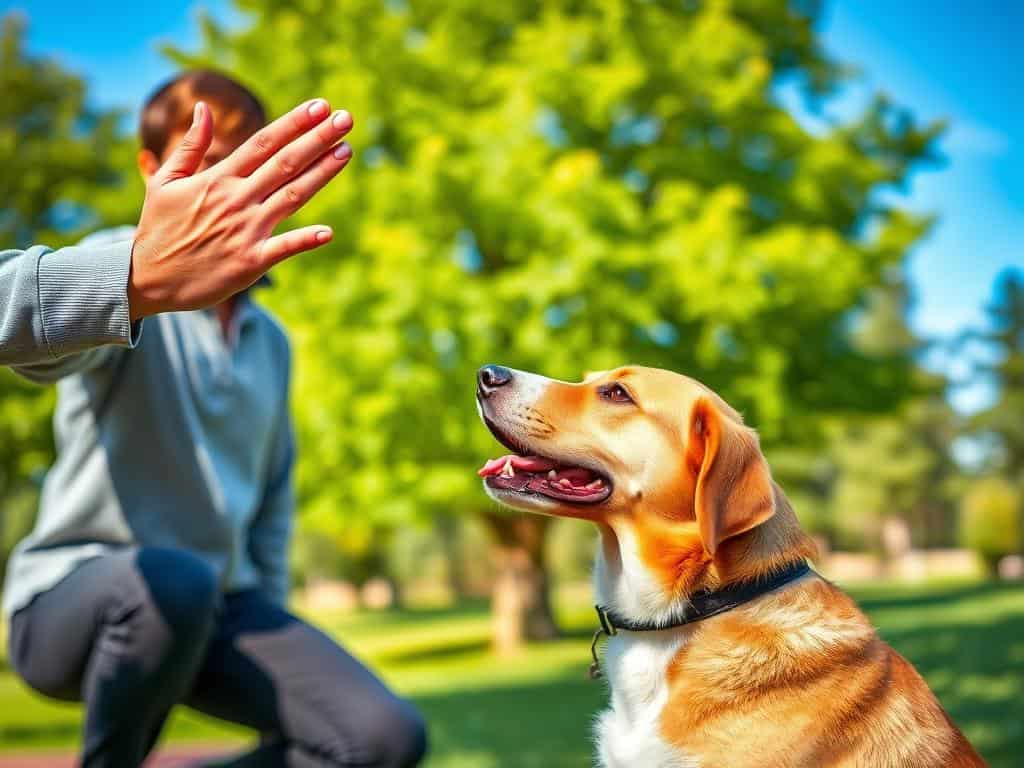
As a dedicated pet owner, I’ve learned that talking to my furry friend is more than just words. I remember a sunny afternoon at the park when my golden retriever, Max, was chasing squirrels instead of listening. That’s when I knew hand signals could help us both.
These visual cues make obedience better and strengthen our bond. Training tools like hand signals are great for clear communication, even when it’s loud. For dogs with hearing loss, hand signals are a lifesaver for keeping our connection strong.
Let’s dive into the world of hand signals and understand our pets better!
Key Takeaways
- Hand signals effectively enhance communication during dog training.
- Using visual cues is key in loud places and for dogs with hearing loss.
- Consistent practice of basic commands improves behavior.
- Short training sessions keep dogs focused.
- Rewards like treats and praise are key for learning.
Why Use Hand Signals in Pet Training?
Hand signals in pet training have many benefits for both pets and their owners. They help in places where sounds are hard to hear. Dogs are great at reading body language, making them quick to learn hand signals.
The Importance of Visual Cues
Visual cues, like hand signals, are key for talking to pets. Dogs can pick up on these cues faster and better than just words. This skill is super helpful in places with lots of noise, like dog parks.
For older dogs or those with hearing loss, hand signals are a lifesaver. They keep these dogs involved in training and strengthen their bond with their owners.
Adapting to Hearing Loss
Teaching dogs to respond to hand signals is vital as they get older. About 5 to 10% of dogs have some hearing loss. This way, they can always get guidance, no matter their hearing.
This method keeps the pet and owner connected. It ensures they can communicate effectively, even when voices are not enough.
How to Teach Pet Hand Signals
Teaching hand signals to pets starts with getting their attention. This first step is key to effective communication. It’s important to make eye contact to reinforce your message. I often call my dog’s name or wave to get their attention.
Establishing Attention
After getting their focus, I link a hand signal to a command. Positive reinforcement is key here. When my dog responds correctly, I reward them with treats or praise. This helps them understand the signal better and encourages them to repeat it.
Studies show dogs prefer visual cues, making this method great in loud places.
Reinforcement Techniques
Using lure-and-reward training helps a lot. For example, treats help my dog learn to sit. As they get better, I give fewer rewards, so they respond to the gestures alone. Being consistent and repeating the training is essential. It helps my dog learn each signal well before moving on to harder ones.
Successful Hand Signals for Better Obedience
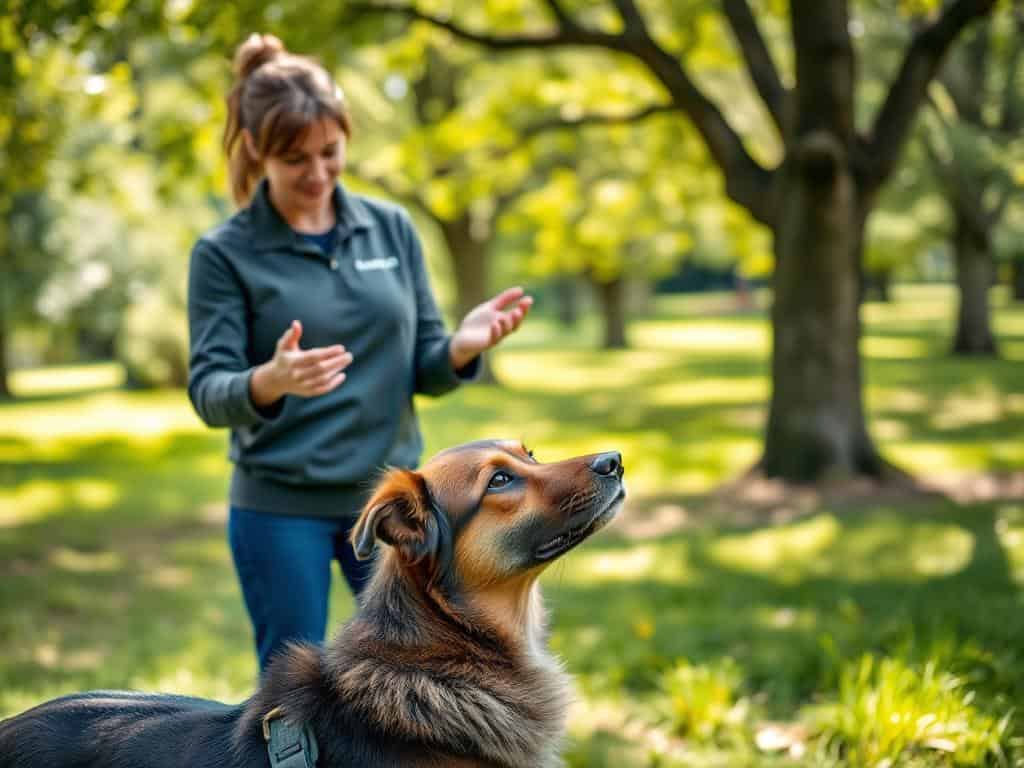
Using hand signals to train my pet has improved our communication. It has made our obedience training more effective. Basic commands like sit, stay, come, and down are key. These commands help my dog learn what I want.
Clear gestures, like raising a hand for sit, help my dog understand. It’s important to use these commands the same way every time. This avoids confusion and strengthens our bond.
Basic Commands to Master
Teaching my dog hand signals for basic commands is a priority. Studies show dogs trained with hand signals are very accurate, up to 99%. This is more than when using only verbal commands, which reach 82% accuracy.
Using visual cues makes training clearer and more precise. It’s essential for everyone in my home to use the same signals. This prevents misunderstandings.
Consistency in Training
Keeping training consistent is important for my dog’s learning. Training sessions should be short, focused, and free from distractions. This keeps my dog interested and engaged.
Regular practice of basic commands is key. Dogs learn best with repeated, positive reinforcement. Every training session is a chance to improve our communication. A consistent training routine helps my dog obey better, making our home a happier place.
Conclusion
Teaching pets hand signals is more than just a method. It’s a way to improve communication between pets and their owners. By using visual cues, we can see better behavior and a stronger bond. This is key as pets get older and may have hearing problems.
Studies show dogs love visual cues more than sounds. This makes training more fun and engaging. It’s a powerful way to connect with our pets.
Consistent practice is key to teaching hand signals. Dogs often prefer gestures over words. The American Kennel Club suggests using hand signals early, along with verbal cues. This creates a strong communication system for life.
Using hand signals has made my pets more obedient and our bond stronger. With patience and consistency, this method will keep improving our communication. It’s a lasting change that makes our time together better.














+ There are no comments
Add yours