
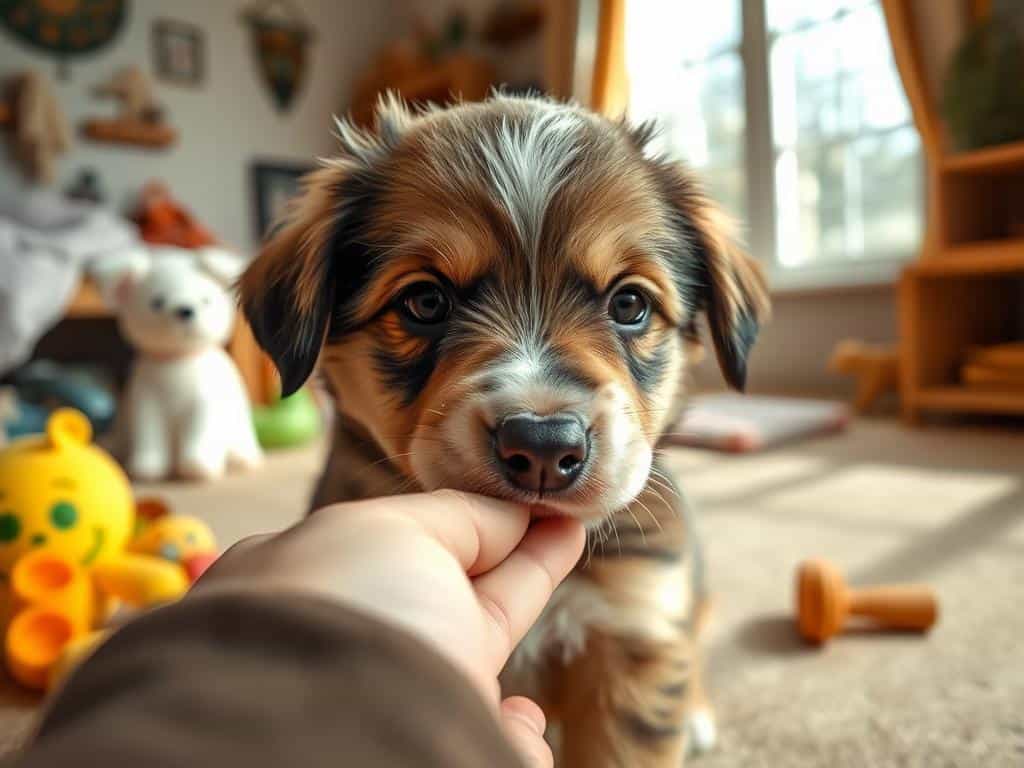
As I was enjoying a sunny afternoon on my porch, my new puppy, Max, bounded over. His tail wagged and his eyes sparkled with mischief. Just as I reached down to give him a gentle pat, he lunged forward and caught my hand in his eager mouth.
It was all in fun, of course, but it reminded me how tricky puppy biting can be. Adult dogs that mouth people likely never learned not to do so during their puppyhood. In Max’s case, it was all playful—most of the time—but I realized if I didn’t address it soon, it could become a bigger issue.
When it comes to pet mouthing solutions, understanding this behavior is key. Not only can those nibbles be annoying, but as dogs grow, their mouthing can turn painful and even lead to injury. Implementing proper behavior correction techniques while keeping the play gentle can ensure a happy, safe environment for both Max and me.
Key Takeaways
- Adult dogs who mouth often missed learning appropriate behaviors as puppies.
- Playful mouthing is generally less painful than aggressive biting.
- Time-outs can effectively reduce mouthy behavior in older dogs.
- Ignoring a mouthy dog for short periods can teach them about boundaries.
- Regular exercise and mental stimulation are essential to preventing excess mouthing.
- Teaching commands like “leave it” and “sit” helps reinforce self-control.
Understanding Pet Mouthing Behavior
Pet mouthing is a key part of how dogs communicate and play. Puppies use their mouths to explore and play. Older dogs might mouth to get attention or play.
Why Do Pets Mouth?
Dogs often mouth because it’s instinctive, like during puppy biting. Puppies chew on things, including hands, to ease teething pain. This helps them learn about their world.
Knowing when mouthing is just play or a sign of aggression is important. This helps pet owners understand their dogs better.
Playful Mouthing vs. Aggressive Behavior
Telling the difference between playful mouthing and aggression is key. Playful mouthing shows a relaxed dog. Aggressive mouthing, on the other hand, shows stress or tension.
If a pet shows aggression signs, it’s best to talk to a behaviorist. They can help change these behaviors.
Effective Pet Mouthing Solutions
Dealing with mouthing behavior in pets needs a mix of strategies. Teaching bite inhibition, redirecting behavior, and using time-outs are key. These methods help correct behavior positively.
Teaching Bite Inhibition
Teaching bite inhibition is essential for pet owners. Puppies start mouthing early, around seven weeks. It’s important for them to learn what pressure is okay during play.
Hard bites can be stopped with a loud yelp. This tells the puppy they’ve gone too far. It helps them learn to adjust their bite and avoid hurting.
Redirecting Behavior
Redirecting behavior is another good tactic. I give my pet chew toys during play to keep them away from my hands. This teaches them what’s okay to bite.
Playing games like fetch or tug-of-war also helps. It shows them teeth shouldn’t be on human skin. Giving them toys keeps them busy and teaches them right play behavior.
Utilizing Time-Outs
Time-outs are useful for setting boundaries. If my pet mouths me, I take a short break. This shows them mouthing means no play.
It’s key to stay calm during these moments. Getting upset can make things worse.
Conclusion
It’s key to tackle pet mouthing to have a good bond with our pets. Teaching them to control their bites and redirecting their actions are important steps. Using time-outs also helps a lot.
Knowing why pets mouth, like for attention or curiosity, helps us use gentle play. This makes our interactions better.
Using positive reinforcement training is also vital. It takes time and effort, but it makes our lives together safer and more fun. With hard work, we can change our dog’s behavior and improve our time together.
By sticking to these methods and using the right tools, we can make our pets happier. Understanding and training them in a kind way strengthens our bond. This makes our companionship even more rewarding.

















+ There are no comments
Add yours