
As I sat on my living room floor, treats were scattered in front of me. My golden retriever, Bella, was wagging her tail excitedly. I picked up the clicker, and with every click, Bella’s ears perked up.
With a few simple commands, she quickly learned new tricks like “sit” and “shake paw.” Seeing her eyes light up when she got a reward was amazing. It showed how powerful pet psychology and rewards can be.
It’s great to know that even rabbits, birds, and horses can do well with this training. Clicker training isn’t just effective; it’s also a great way to bond with our pets. This section will dive into the details of clicker training and why it’s a must-try for pet owners.
Key Takeaways
- About 80% of dogs respond positively to positive reinforcement methods.
- Clicker training can increase training efficiency by up to 50%.
- Clicker-trained dogs have a success rate of around 90% in learning new behaviors.
- Using a clicker improves reward accuracy by up to 75% compared to verbal praise alone.
- 95% of dog owners report improved communication with their pets after implementing clicker training.
The Basics of Clicker Training
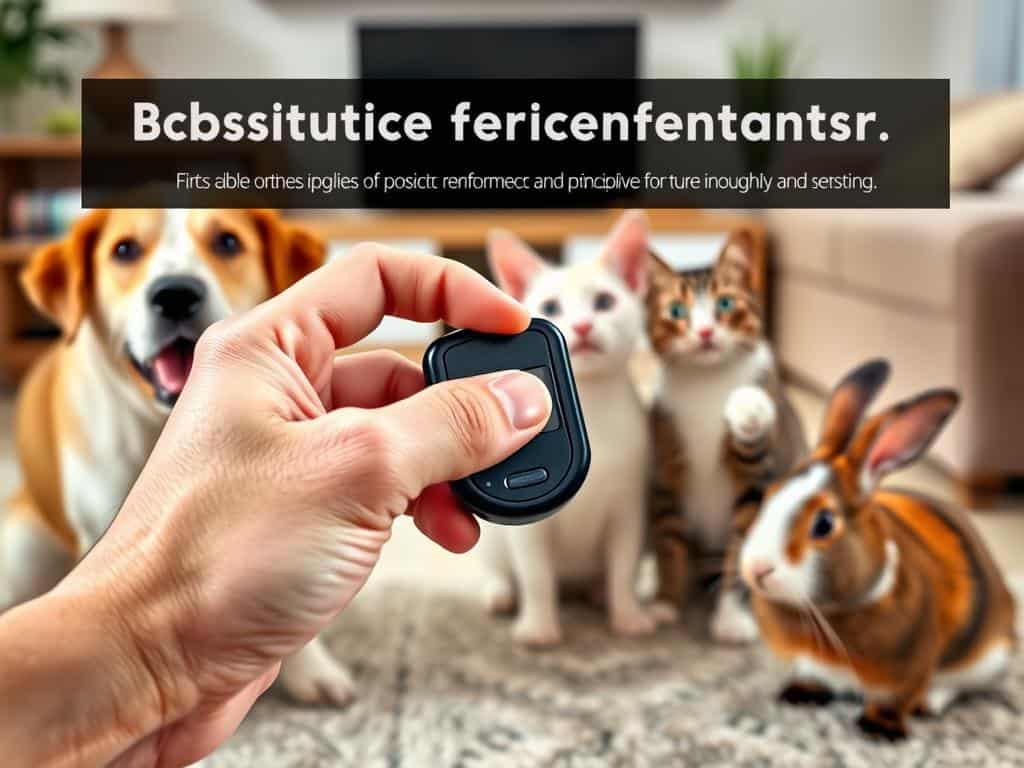
Learning about clicker training is key for teaching pets new tricks. The clicker training definition is about using a device that makes a clear sound. This sound tells the animal they did something right. It’s based on operant conditioning, a way to teach animals through rewards.
What is Clicker Training?
Clicker training gives pets a clear sign when they do something good. It uses positive reinforcement, giving treats right after the action. This helps pets link their actions to the rewards.
Timing is very important. The pet must connect the click sound with the treat. This makes training fun and helps pets learn fast.
The Psychology Behind Clicker Training
Clicker training shows that animals like to do things that make them happy. The clicker gives instant feedback, showing which action is rewarded. This makes learning easier and more fun.
The clicker’s sound is a clear signal, helping pets understand better. When a treat comes after the click, it creates a positive cycle. This cycle keeps pets eager to learn and makes training a fun experience for both.
Types of Training Tools for Effective Clicker Training
Exploring clicker training reveals the importance of the right tools. The first step is picking a clicker, a key tool for training pets. I can choose from traditional push-button, thumb, or sound clickers. It’s vital to pick one that suits my pet’s sensitivity.
Each clicker makes a different sound. Choosing a non-startling clicker keeps my pet comfortable and focused during training.
Choosing the Right Clicker
Choosing a clicker can seem daunting, but knowing what my pet likes makes it easier. Some pets prefer softer sounds, while others like louder clicks. The right clicker helps in training and strengthens our bond.
Keeping training sessions short keeps my pet excited for our time together.
Other Essential Training Tools
My training tools also include top-notch treats, lures, and props. These help in teaching pets new behaviors. Treats as rewards encourage my pet to participate in training.
Luring is a gentle method that guides pets without force. These tools make training fun and create a supportive learning environment for my pet.
















+ There are no comments
Add yours