As a dog owner, I remember a crisp autumn day. I took my energetic Labrador for a stroll in the local park. The sun was shining, and the leaves were a vibrant gold.
It felt like the perfect opportunity for some outdoor training. I had always envisioned my dog enjoying the freedom of running off-leash. What I didn’t anticipate was the moment when he spotted a squirrel.
In that split second, despite my commands, he dashed away. This left me breathless and filled with anxiety. This experience underscored the importance of reliable recall training.
I learned that teaching my furry friend to return to me could not only keep him safe. It also offered peace of mind. Today, I want to explore how to tackle pet recall issues effectively.
Ensuring our dogs can enjoy their freedom with the safety they deserve is key.
Key Takeaways
- 93% of pet owners agree that recall training is vital for safety.
- High-value rewards can significantly boost recall success rates.
- Consistent training methods can enhance recall training effectiveness.
- Practicing in various environments is essential for reliability.
- Incorporating fun recall games can make training enjoyable for pets.
- Using a long leash during training strikes a balance between freedom and control.
Understanding Pet Recall Issues
As pet owners, we have a big responsibility to make sure our dogs come back when called. It’s key for their safety and freedom. Dogs behave differently in exciting places, which can affect how well they listen to us. Knowing how important recall training is can help us teach our dogs better.
What Is Reliable Recall?
Reliable recall means a dog comes back quickly and happily when called. It’s very important for keeping dogs safe when they’re off-leash. In emergencies, dogs need to listen fast. Teaching them to come back is a way to build a strong bond.
Importance of Recall Training
Recall training helps dogs stay safe while giving them freedom to explore. A dog that knows how to come back can avoid dangers. It’s also important for keeping them safe in emergencies. Training helps dogs focus better, even when there are distractions.
Challenges in Recall Training
There are many things that can make recall training hard. Dogs can get distracted by other animals or people. Training methods need to be just right for each dog. By understanding these challenges, we can tailor our training to meet our dog’s needs better.
Effective Techniques for Solving Pet Recall Issues
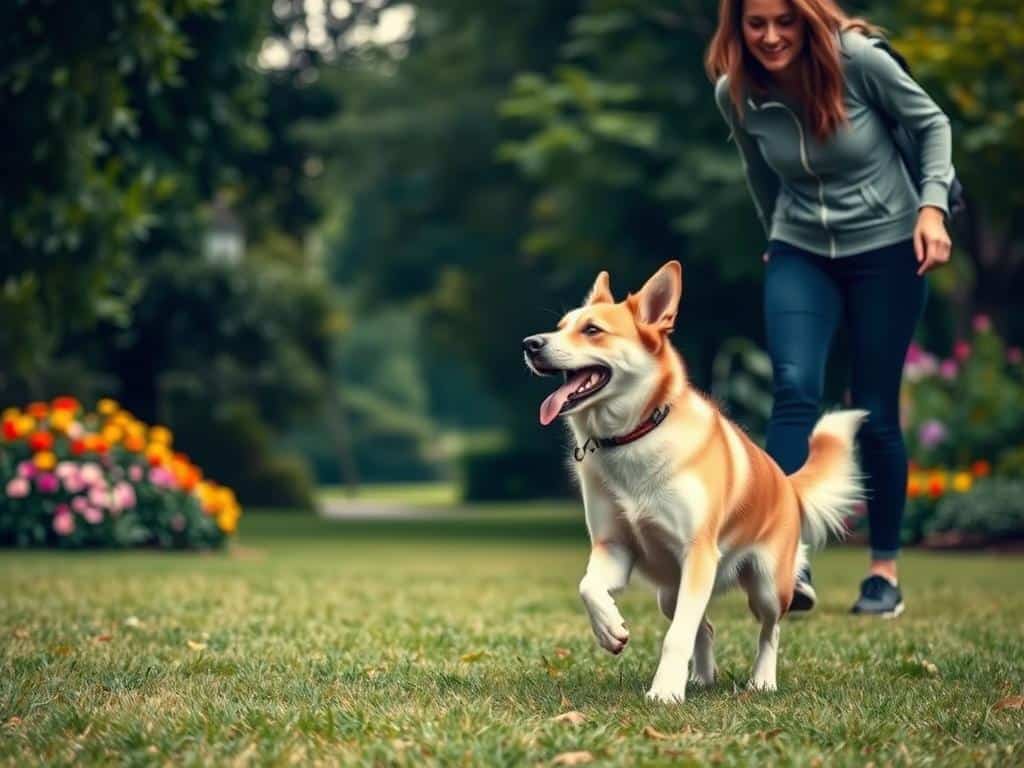
Teaching dogs to recall effectively needs a careful plan and understanding of key techniques. A good training environment is key. I start in a low-distraction training space, like indoors or a fenced area, to help my dog focus on me. Then, I add distractions like other pets or environmental elements for effective recall sessions that mirror real life.
Proper Training Environment
Training in a controlled space helps my dog feel confident when called. As they get better, I move to more challenging places like the garden. This adds more distractions and helps them learn to recall in different situations.
Using High-Value Rewards
Using high-value rewards like tasty treats or favorite toys is key. I use Mountain Wild Training Treat Nibs for their smell and size. This makes my dog excited to come back to me. Quick rewards after a successful recall help them learn the command better.
Incorporating Recall Games
Adding recall games makes training fun and keeps my dog interested. Games like “Catch Me” and “Find Me” make learning fun. It’s important to keep training positive to keep my dog happy and eager to learn.
Conclusion
Ensuring pet safety is key, and reliable pet recall is a big part of it. As dog owners, we must commit to consistent recall training. This helps us tackle challenges and keep our pets safe.
Setting up a good training area, using high-value rewards, and playing recall games are effective. These methods make our pets more reliable and keep them safe. It also makes outdoor time fun and worry-free.
Recall training is not just the end; it’s the start of ongoing efforts. With dedication and flexibility, we can keep our dogs safe and happy. They can explore freely, enjoying their time outside.
















+ There are no comments
Add yours