
When I first thought about getting a puppy, I felt both excited and unsure. Walking into the local animal shelter, I was greeted by happy barks from shelter pets. Each had their own story. One puppy in particular caught my eye, with his wagging tail and big brown eyes.
But adopting a puppy is more than just falling in love. It requires preparation and understanding. Many rescue dogs have quirks from their past. It’s important to know your lifestyle and the needs of different dog breeds.
This puppy adoption guide taught me the value of research and realistic expectations. Creating a safe, enriched environment for my puppy was key. Every step, from picking the right breed to getting the right supplies, is important in making a loving home for a baby dog.
Key Takeaways
- Assess your lifestyle and choose a dog breed that fits your environment and needs.
- Research the specific behavioral characteristics of shelter pets before adoption.
- Your adopted puppy may take time to adjust; plan for a transition period of 3 days to 3 months.
- Establish a positive reinforcement training method to effectively communicate with your new pet.
- Prepare financially for ongoing pet care, including vet visits and essential supplies.
- Ensure your home provides an enriched environment to support your puppy’s mental and physical well-being.
Preparing for Adopting a Puppy
When I decided to adopt a puppy, I knew I had to take several steps. The first was a lifestyle assessment. I looked at my daily routine, how active I am, and my home environment. This is key because different dog breeds need different things.
High-energy breeds need owners who are active. On the other hand, lower-energy breeds do well in calm homes.
Assessing Your Lifestyle and Home Environment
Doing a lifestyle assessment helped me see if a puppy would fit into my life. I thought about my busy work schedule and how it might affect caring for a puppy. I also looked at my living space and how much time I have for training and play.
Researching Dog Breeds and Their Needs
In my research, I looked at different breeds to find the right one for me. I learned about their behaviors and traits. Knowing this helped me make a better choice when adopting.
Understanding the Financial Commitment
I knew puppy costs would add up quickly. I wanted to make sure I could afford it. From food and vet bills to training and grooming, the costs are high. I looked into the average costs for different breeds to prepare financially.
Consulting with Family and Other Pets
Talking to my family about adopting a puppy was important. It made sure everyone knew what was involved. I also thought about my current pets and how they would get along with a new puppy.
Essential Steps to Take After Adopting a Puppy
Bringing a new puppy home needs careful planning and quick action. Following key steps after adoption helps make the transition smoother. Knowing the 3/3/3 rule helps understand the first stages of having a puppy.
The 3/3/3 Rule: What to Expect in the First Month
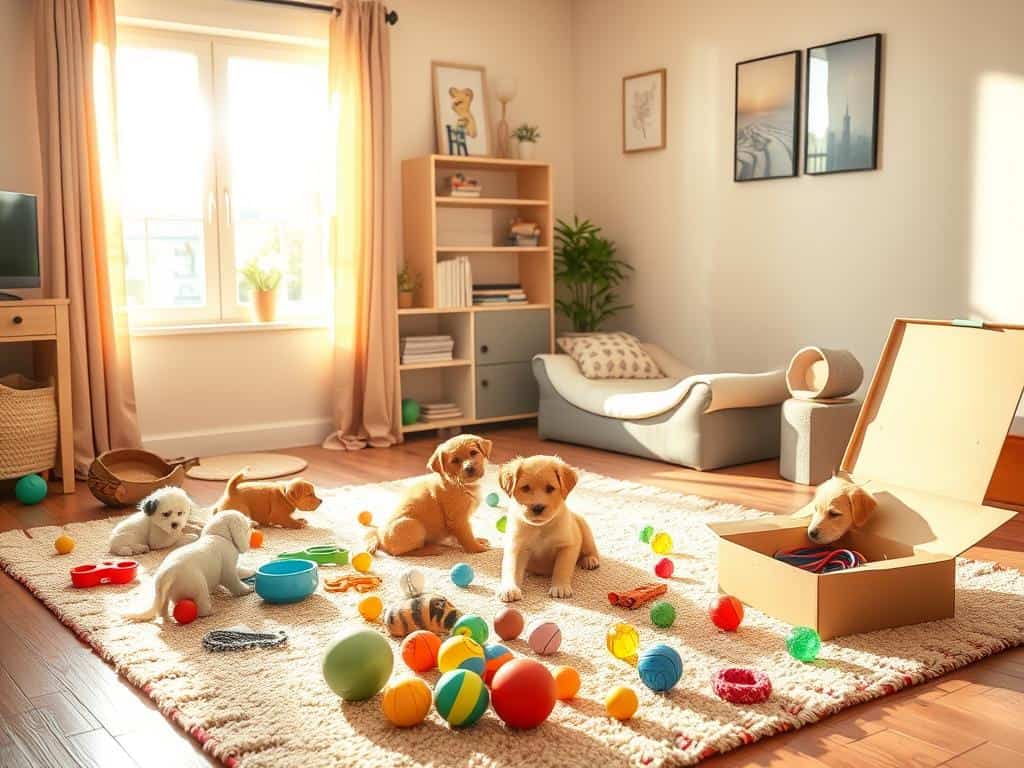
The 3/3/3 rule breaks down into three main periods: the first three days, the next three weeks, and the following three months. In the first three days, my puppy might feel scared. It’s important to make a calm, safe space for them. This includes soft bedding and safe toys to help them feel at ease.
As the weeks go by, my puppy will start to show their true self. By the end of three months, we should have a strong bond. This makes training and getting used to the family easier.
Establishing a Comfortable Home Environment
Creating a great home for puppies is more than just adding comfort items. It’s also about safety. Microchipping is a key safety step to ensure my puppy’s safety if they get lost. I also need to make sure my home is puppy-proofed, removing dangers and using dog gates.
Crate training is also helpful. It aids in house-training and provides a safe space when I’m not around. Early vet visits are important for my puppy’s health, making the first vet visit a must within a week.
Creating a Routine for Care and Training
Having a routine for my puppy brings them security. This includes feeding them at the same time every day and taking them out every two hours. Changing their diet slowly over one to two weeks helps avoid stomach problems.
Exercise and mental stimulation are key. Activities like walks, playtime, and puzzle toys keep their minds and bodies active. Positive reinforcement during training helps them learn good behavior and strengthens our bond.
Conclusion
Reflecting on adopting a puppy, I see that preparation is key. It’s not just about the excitement of having a new pet. It’s about understanding the big responsibilities that come with it.
These responsibilities include training, nurturing, and caring for your puppy. They are the foundation for a strong bond that grows over time.
My experience with over 200 rescue puppies has taught me a lot. Spending time with my puppy, whether training or just cuddling, strengthens our bond. It also brings joy to our community as friends meet the new family member.
Whether I adopt a puppy or an adult dog, caring for them responsibly is essential. Each puppy has its own needs and personality. By adopting, I’m not just getting a pet. I’m also helping to fight pet overpopulation and support shelters.
The journey of raising a puppy is full of lessons. I’m excited to learn and enjoy every moment with my new furry friend.
















+ There are no comments
Add yours