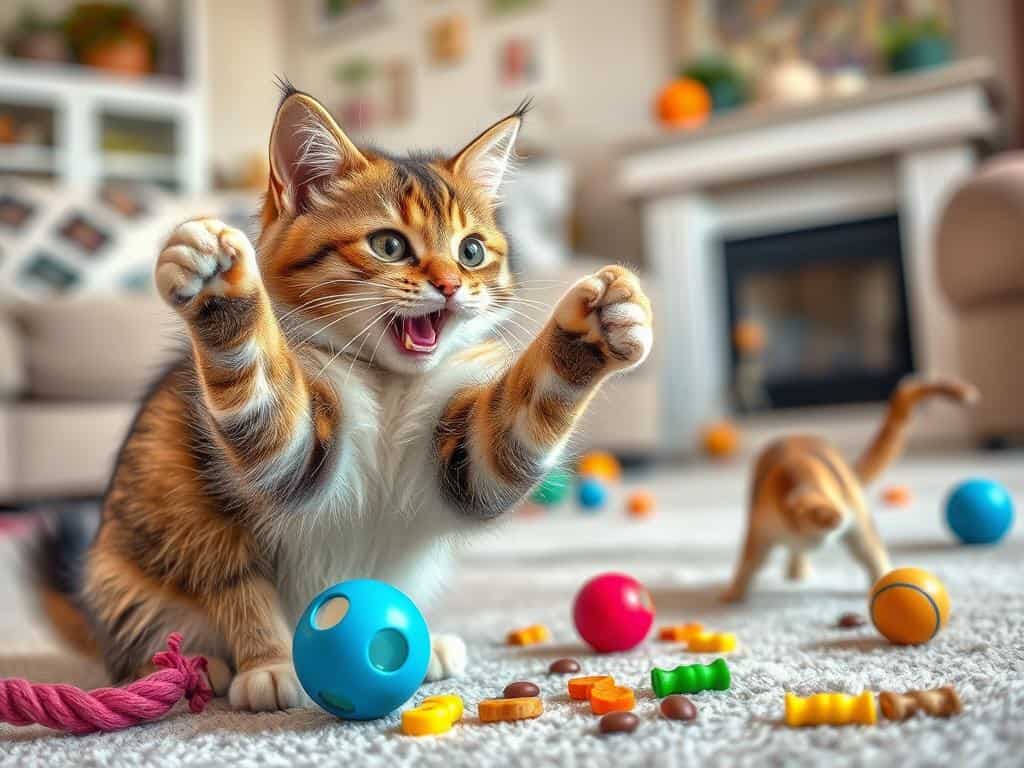
When I adopted my rescue cat, I was full of excitement and curiosity. I thought cats were hard to train, but I wanted to try. With treats and patience, I started a journey filled with surprises.
I began with the basics, teaching my cat to respond for treats. I was amazed to see how quickly my cat learned. They went from shy to eager to learn tricks.
Understanding cat psychology is key to training them. Cats are like teenagers and need motivation. Learning to connect with my cat made our bond stronger and more trusting.
In this article, I’ll share tips on teaching your cat tricks. With persistence and the right approach, you can do it! Let’s explore the world of feline training together.
Key Takeaways
- Most cats can learn basic tricks with proper training techniques.
- Positive reinforcement is key to effective cat training.
- Clicker training helps pinpoint desired behaviors in your cat.
- Training sessions should be short, fun, and interactive.
- Implementing rewarding tactics encourages your cat’s participation.
Understanding Cat Psychology and Training
To train my cat, I must understand cat psychology. Cats are like independent teenagers. They can be aloof, so I need to tailor behavior solutions to their unique personalities. Training sessions are great for their minds and help us bond.
Positive reinforcement is key in training cats. Using treats can boost success rates up to 80%. It makes my cat more eager to learn and repeat good behaviors.
Training sessions should be short, about five minutes. This helps my cat remember what he learns. These brief sessions keep him focused and strengthen our bond. It’s rewarding for both of us, improving obedience and our relationship.
Effective Cat Training Tips
Training a cat can be a rewarding experience for both the pet and owner. Positive reinforcement is a key strategy. It makes our cats feel valued and encourages them to learn new things. Rewarding them right after they do something good helps them connect the action with the reward.
Experts say to keep training sessions short and fun. They should last about three to five minutes. This keeps our cats interested and prevents boredom.
Using Positive Reinforcement
Positive reinforcement is a key part of my cat training. It focuses on rewarding good behavior instead of punishing bad ones. When my cat does something right, I give her a treat to encourage her to do it again.
Choosing the right treats is important. They should be something my cat likes, like dry kibble or wet food. Using the same commands and signals helps my cat understand me better. Getting everyone in the house involved helps my cat know what’s expected of her.
The Role of Clicker Training
Clicker training is a powerful tool that works well with positive reinforcement. It uses a click sound to mark the exact moment my cat does something right. This helps my cat learn to associate the click with a reward.
Using a clicker with treats helps me time things perfectly. I introduce the clicker in everyday moments to make it positive. This helps my cat learn faster and more easily.
Fun Tricks to Teach Your Cat
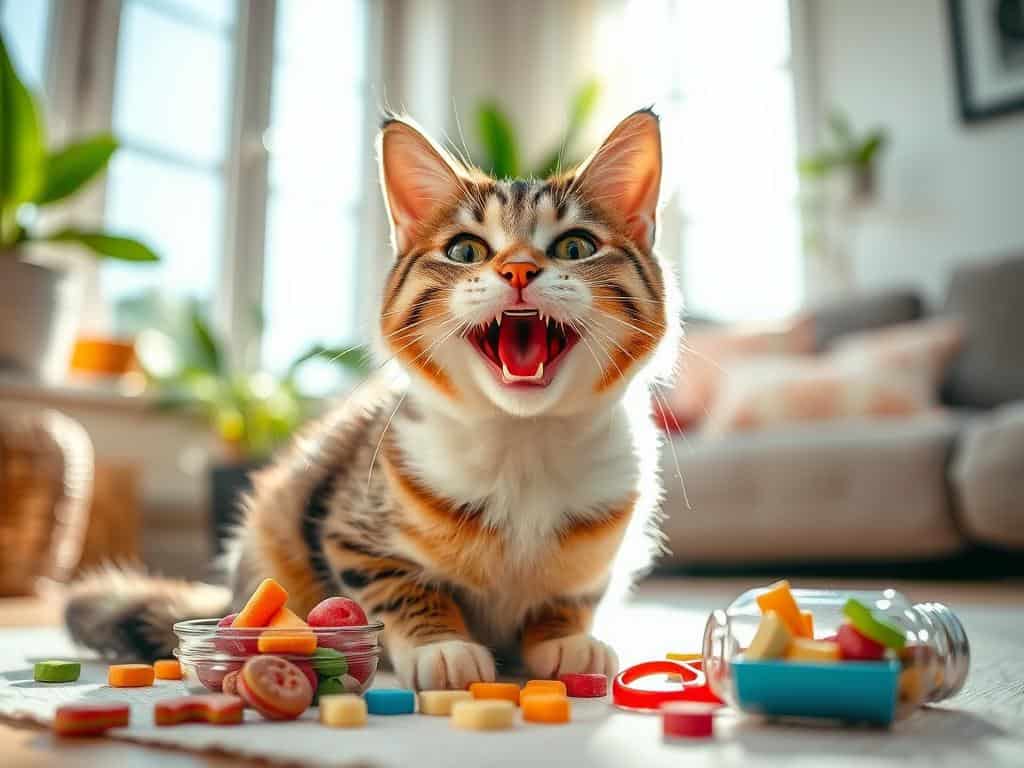
Teaching tricks to cats is rewarding for both the owner and the cat. Adding fun cat tricks to your daily routine is great. It makes your bond stronger and keeps your cat active. Here are two fun tricks to try.
Shake Hands
Teaching your cat to shake hands is a fun trick. Start by holding your hand low and wait for your cat to touch it. When she does, click and give her a treat. This builds trust and makes learning fun.
With regular practice, your cat will learn this trick fast. It becomes a fun way to impress your friends.
Jump Through a Hoop
Teaching your cat to jump through a hoop is another cool trick. Begin by holding the hoop and placing a treat on the other side. This encourages her to jump. When she does, reward her right away.
As she gets more confident, raise the hoop’s height and move it around. This trick not only improves her agility but also strengthens your bond through play.
Conclusion
Teaching my cat tricks has been incredibly rewarding. I’ve found that cats can learn to follow commands and do fun tricks, just like dogs. Using positive reinforcement and clicker training has helped a lot.
Training my cat has many benefits. It reduces anxiety and aggression, making our home more peaceful. Short training sessions keep her interested and strengthen our bond.
Watching my cat learn new tricks has brought us closer together. I’m excited to teach her even more and enjoy the benefits of training. It’s not just about the tricks; it’s about our growing friendship.
















+ There are no comments
Add yours