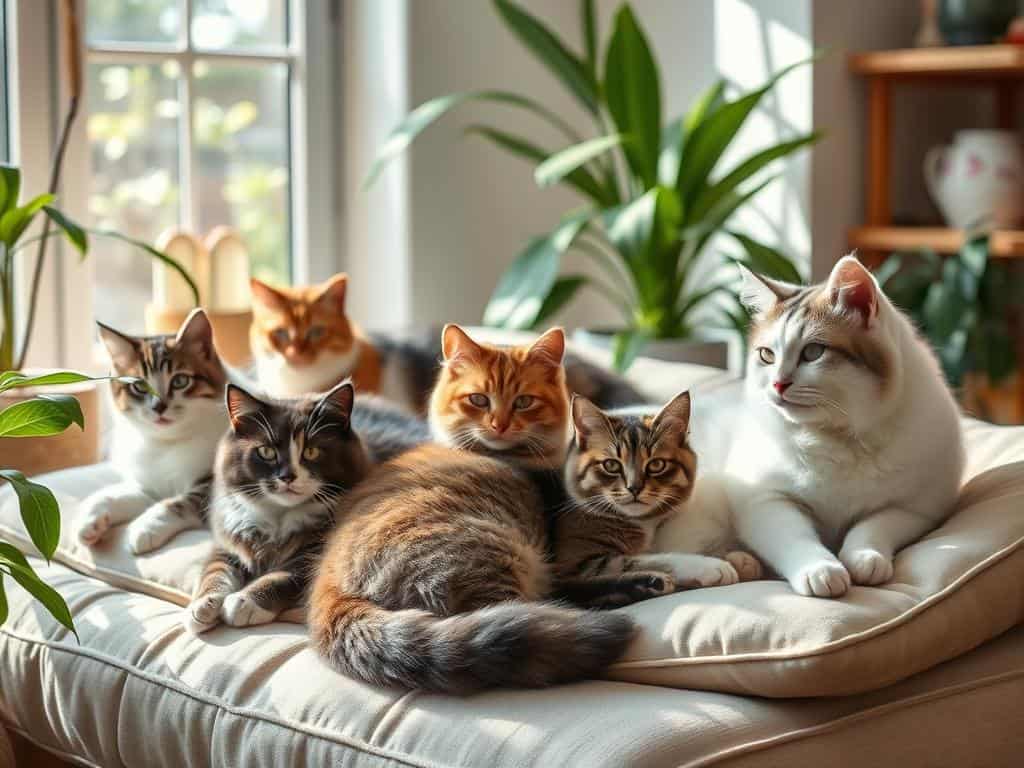
I’ve always loved cats, but my allergies made it hard to have one. I wanted a fluffy cat by my side, but allergies got in the way. I looked into hypoallergenic cats, hoping to find one that wouldn’t make me sneeze.
After lots of research, I found out that some cats make fewer allergens. This was more than just finding a pet. It was about living with my allergies and enjoying a cat’s company. I learned about breeds like the Siberian and Sphynx.
Key Takeaways
- There are numerous hypoallergenic cat breeds, including the Siberian, Bengal, and Sphynx.
- Regular grooming can help reduce allergens in your home.
- No cat is 100% hypoallergenic; consult an allergy specialist before adoption.
- Female and neutered male cats typically produce fewer allergens.
- Some breeds require specific diets to aid in allergen reduction.
What Are Hypoallergenic Cats and How Do They Work?
For those with allergies, understanding hypoallergenic cats is key. It’s not just fur that causes allergies. A protein called Fel d 1 in dander, saliva, and urine is the main culprit. This protein leads to allergy symptoms.
People with sensitivities might find relief with certain breeds. These cats produce less Fel d 1, helping manage allergies better.
Understanding Cat Allergies
Cat allergies are more common than dog allergies. Many people react to dander and certain cat breeds. The severity of these allergies varies among individuals.
Some breeds, like Siberian cats, may cause fewer symptoms. They have less Fel d 1 despite their long fur. Breeds like the Cornish Rex and Devon Rex also shed less, thanks to their unique fur.
Myths vs. Facts
There are myths about hypoallergenic cats that need clearing up. Short-haired cats aren’t always hypoallergenic. The allergenic nature of a cat depends more on its breed than fur length.
For example, Sphynx cats have little shedding but can produce allergens through their skin oils. Regular grooming can greatly reduce dander, helping manage allergies.
Some breeds, like Balinese and Russian Blue cats, produce less Fel d 1. This can help alleviate allergy symptoms for their owners. It’s important for cat owners to research different breeds and their allergenic properties.
Top Hypoallergenic Cat Breeds for Allergy Sufferers
Looking for hypoallergenic cats can be a game-changer for those with allergies. Many breeds are designed to be more allergy-friendly. Here are some top picks for those seeking allergy-friendly pets.
Siberian Cat
The Siberian cat is a standout among low-shedding breeds. They produce less of the protein Fel d 1 that causes allergies. Studies show that about 75% of people with allergies don’t react to Siberians, making them a great choice.
Siamese Cat
Siamese cats have a short, dense coat that sheds less. This means fewer allergens in your home. Their playful and loving nature also makes them appealing pets for those with allergies.
Bengal Cat
Bengal cats have a short coat that sheds less than many other breeds. They are energetic and need lots of attention. But, they can be a good fit for those looking for hypoallergenic cats.
Russian Blue
The Russian Blue produces less Fel d 1 than many cats. Their thick coats trap allergens well. Plus, they are gentle and make great pets for families with allergies.
Sphynx Cat
Sphynx cats have no fur, which means fewer allergens. They need regular baths to manage their skin oils. This makes them a smart choice for those looking for hypoallergenic cats.

Care Tips for Owners of Hypoallergenic Cats
Caring for hypoallergenic cats means taking steps to lower allergens at home. This keeps your cat healthy and reduces allergic reactions in people who are sensitive. By using the right grooming tips for cats and keeping your home clean, you can make a big difference.
Regular Grooming and Cleaning Practices
Regular grooming is key for cleaning for allergy management. Brushing your cat often helps cut down on shedding and dander. This keeps allergens from spreading in your home. It’s best to groom your cat every week and bathe them once a week to cut down allergens by up to 84 percent.
Keeping your home clean is also important. Vacuum often and use air purifiers with HEPA filters in rooms where your cat hangs out. Carpets can trap allergens, so smooth floors might be a good choice for your home.
Consulting with Professionals
Talking to veterinarians can give you great tips for maintaining pet health and managing allergens. They might suggest special diets to reduce allergens in your cat’s saliva and skin. Getting professional advice helps you manage allergens well and keeps your cat healthy.
Dealing with allergies at home is a big part of having hypoallergenic cats. By following these tips and getting help from experts, you can make your home safer and more comfortable for you and your pet.
Conclusion
Understanding hypoallergenic cats is key for those with allergies who want a pet. Breeds like the Siberian, Russian Blue, and Bengal have less Fel d 1 protein. This protein is the main cause of cat allergies.
Even though no cat is completely hypoallergenic, these breeds can help a lot. They make it easier for people with allergies to have a cat.
Good allergy management is more than just picking the right cat. It also means keeping your home clean. Regular grooming and baths can cut down on allergens.
Using HEPA filters and making cat-free areas also helps. Being proactive and informed can make living with a hypoallergenic cat possible.
Choosing the right breed and taking good care of your cat can help manage allergies. Remember, everyone reacts differently to cats. So, it’s important to know your allergies and talk to experts before getting a cat.















+ There are no comments
Add yours