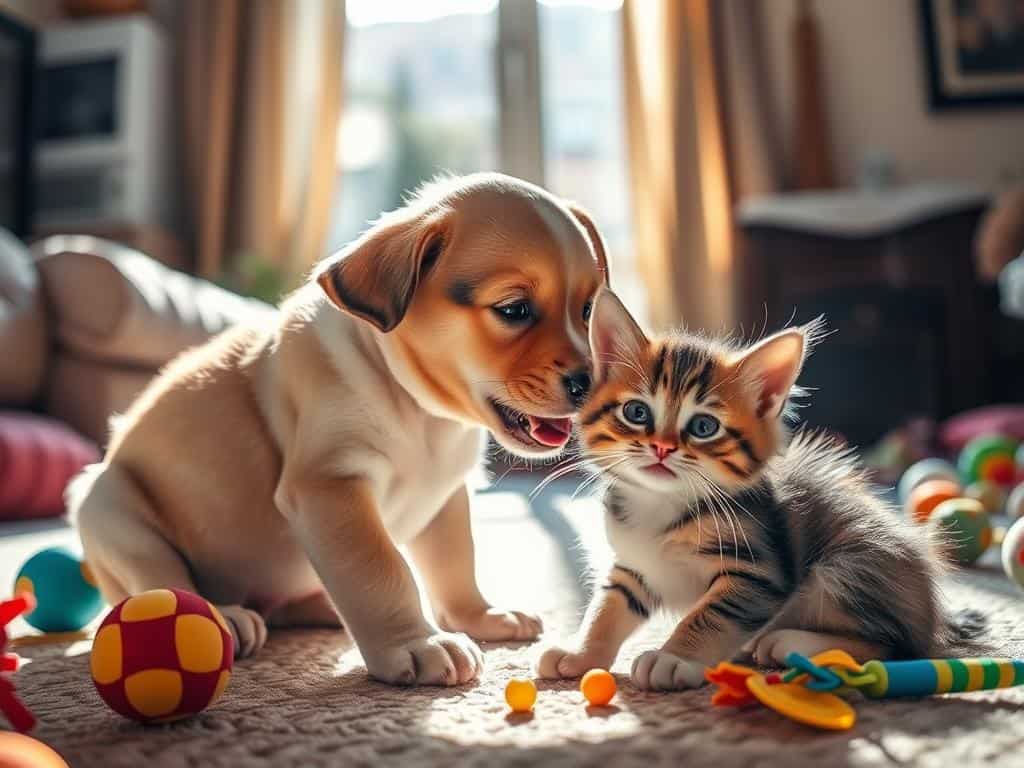
When I first got my puppy, he loved to nibble on my fingers and clothes. It was adorable at first, but soon it hurt. I learned that this was his way of playing, even if it was a bit rough.
It was important to teach him the right way to play. This kept our playtime safe and fun for both of us. I had to be careful and teach him early on.
Many pet owners face similar issues. Dogs often mouth things because they’re excited. But, if not stopped early, it can become a problem. Setting rules and finding ways to stop biting helps keep our pets safe and strengthens our bond with them.
Key Takeaways
- Puppies need proper socialization by 7 to 8 weeks of age to learn bite inhibition.
- Interactive play with other dogs helps puppies understand acceptable behavior.
- Establishing rules is key to guiding puppy behavior from the start.
- There are effective strategies for managing bite-related behavior, including providing toys for stimulation.
- Encouraging noncontact play methods reduces the chance of mouthy behavior in dogs.
Understanding the Reasons Behind Pet Play-Biting
Exploring pet play-biting reveals it’s a common part of a pet’s playful nature, mainly in puppies. This behavior happens when pets are learning about boundaries and how to communicate. Puppies learn to control their bites by mouthing gently with their littermates.
This stage is key for their growth. It helps them understand how their actions impact others. This knowledge is essential for social cues.
Normal Play Behavior in Pets
Watching pets play is truly captivating, more so in the early weeks of life. Puppies usually start play-biting between 6 to 18 weeks old. Allowing this behavior helps them interact healthily with others.
It’s amazing to see how puppies learn to control their mouth pressure through play. Activities with humans can also help them use their energy in a positive way.
The Role of Bite Inhibition
Bite inhibition is vital in a puppy’s development, affecting how they interact with humans and other animals. Teaching discipline in their play can reduce excessive biting as they grow. Using chew toys and redirecting their attention to the right items helps manage play-biting.
Watching and rewarding positive interactions sets boundaries. This ensures their behavior stays playful, not aggressive. Methods like ignoring unwanted jumping and rewarding calmness create a supportive learning space for pets.

Pet Play-Biting: Distinguishing Between Playful Mouthing and Aggression
It’s important to know the difference between playful mouthing and aggressive biting in pets. Pets often play-bite, which can look like aggression. Knowing the signs helps us use the right biting solutions.
Identifying Playful Behavior
Playful mouthing in dogs shows relaxed body language and a soft face. They don’t have tense muscles or posture. It’s key to encourage this play while gently correcting any bad behavior.
Redirecting their attention to toys helps. This way, my pet learns to play right and enjoys being social.
Recognizing Aggressive Biting
Aggressive biting looks very different. It shows stiff body language, a wrinkled muzzle, and pulled-back lips. These bites are forceful and hurtful.
I stay calm and avoid physical punishment. This helps prevent the aggression from getting worse. If my pet shows aggressive behavior often, I seek help from a certified professional. Early action is vital to stop aggressive traits, as isolated dogs are more likely to be aggressive.
Conclusion
Addressing pet play-biting is key for safe and fun times with our pets. Knowing why pets bite helps us tell playful bites from mean ones. It’s important to use positive methods and socialization to stop biting.
Redirecting a puppy’s chew to safe toys works well. This method helps a lot, if done often. Kids under ten need help with this, so watching them play with pets is important. Also, puppies should stay with their mom until they’re eight weeks old to learn social skills.
Being patient and practicing often helps puppies learn good behavior. To stop play-biting, play with other dogs regularly but don’t punish them. This way, we keep our bond strong and our pets happy and well-behaved.
















+ There are no comments
Add yours