
Imagine a quiet afternoon on the couch with a cup of coffee and your favorite show. But then, my dog Max starts whining loudly. It breaks the calm. I see his big brown eyes asking for attention.
It hit me that Max’s whining is more than annoying. It’s his way of saying he needs something or is feeling something. Many pet owners face this problem of dogs whining too much.
Whining can mean different things, like anxiety, boredom, or wanting company. It can mess up our daily lives and cause stress. Knowing why our pets whine is key to solving the problem.
By watching my dog’s body language and listening to his whines, I figured out what he needs. This helps us both live in a quieter, more relaxed space.
In this article, we’ll explore why pets whine and how to stop it. We’ll find ways to calm our anxious pets and make our homes peaceful again. Let’s start making our pets quieter together!
Key Takeaways
- Whining is a normal form of communication for dogs but can lead to frustration for owners.
- Understanding the reasons behind whining is essential for effective behavior solutions.
- Common causes include anxiety, boredom, and attention-seeking behaviors.
- Paying attention to your pet’s body language can provide insights into their emotional state.
- Implementing positive reinforcement can help modify your pet’s whining behavior.
Understanding the Reasons Behind Pet Whining
It’s important to understand why pets whine. They use different sounds to tell us what they need or how they feel. By paying attention to these sounds, I can better meet their emotional and physical needs.
There are several reasons why pets whine. They might be anxious, excited, or just want attention. Recognizing these reasons helps me know how to help my pet.
Common Causes of Whining Behavior
Pets often whine when they want attention. A survey by the American Veterinary Medical Association found that 16% of dogs do this. They might feel bored or neglected.
Some pets whine due to anxiety. Around 9% of dogs show this behavior when they’re stressed. Others whine because they’re excited to see their owners or are in pain.
Knowing why my pet whines helps me take better care of them. It lets me address their needs and make them feel better.
Your Pet’s Body Language
Body language is key to understanding pet whining. For example, if my dog wags their tail while whining, they’re likely excited. But if they tuck their tail and avoid eye contact, they might be anxious or uncomfortable.
Being able to read these signals is important. It helps me create a supportive environment for my pet. This way, I can reduce their anxiety and improve their life.
Effective Pet Whining Solutions
Dealing with pet whining needs a smart plan. It’s about changing behavior and teaching the right ways. Knowing why my pet whines helps me control noise and train them better. Many methods work well if done regularly.
Behavior Modification Techniques
Ignoring whining that seeks attention is a good start. Not reacting to it helps stop the behavior. Teaching my pet to be quiet with commands like “Quiet” helps too. Playing games with them also cuts down on excited whining.
Reinforcing Positive Behavior
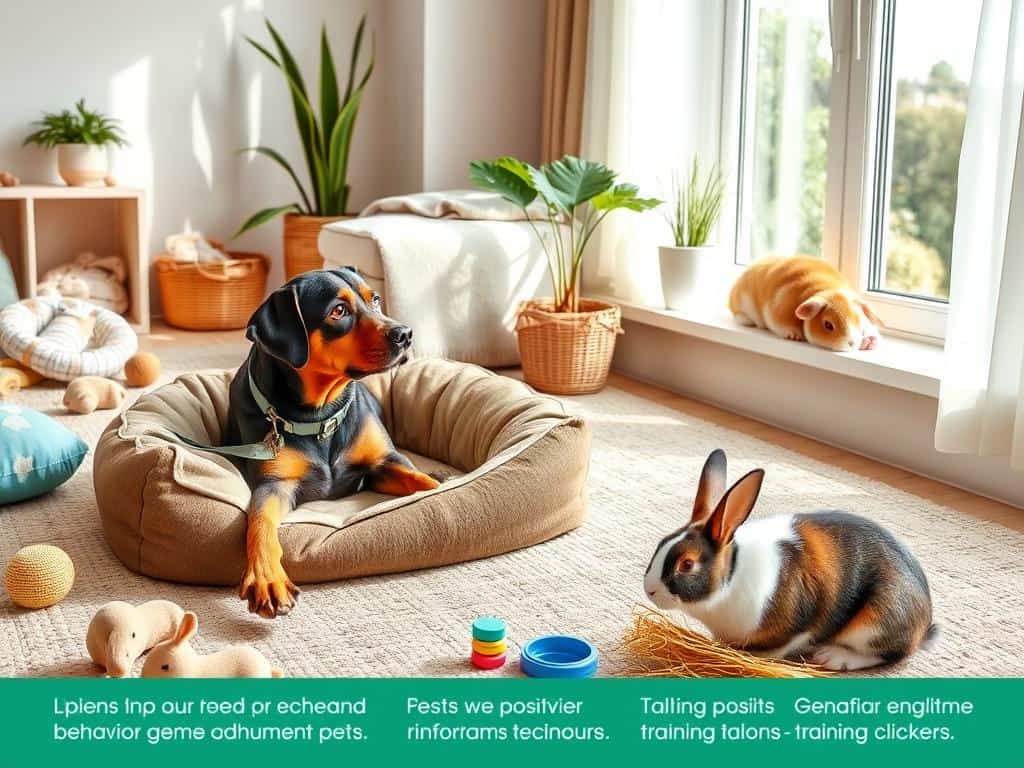
It’s key to reward calm or quiet behavior with treats and praise. Puzzle toys keep their minds busy, which means less whining. Basic training and massages like Tellington-TTouch help reduce anxiety. After three days, I saw a big drop in whining.
Addressing Anxiety in Pets
Managing anxiety in pets is key for their emotional well-being and happiness. Knowing what triggers their anxiety can greatly improve their life. Factors like loud noises, being away from family, or new places can upset them.
By watching my pet closely, I can spot these triggers. This helps me make their environment more comfortable.
Identifying Anxiety Triggers
Pets can show anxiety in different ways. Dogs might whine, bark, or pace when left alone. Loud noises, like fireworks, can scare them, leading to bad behavior.
Cats might meow more or hide when anxious. Knowing what makes my pet anxious lets me find the right ways to help them.
Professional Help for Anxious Pets
When simple changes don’t work, getting professional help is vital. Trained experts can assess my pet’s anxiety and suggest the best treatments. They might recommend desensitization, counter-conditioning, or medication.
Working with these experts ensures my pet gets the best care. It gives me peace of mind knowing they’re in good hands.
Conclusion
Understanding pet behavior is key to solving whining issues. I’ve found that pets whine for many reasons, like hunger, anxiety, or wanting company. By knowing these reasons, I can meet their needs better. This includes regular meals, bathroom breaks, and health checks.
Also, keeping pets active and mentally stimulated helps cut down on whining. Giving them a safe place and introducing new things slowly helps with anxiety. For separation anxiety, patience and sometimes professional help are needed.
Creating a quieter home takes time and effort, but it’s worth it. Regular training and positive interactions help pets do well. It’s important to get help from a vet or dog trainer if problems persist. This way, we can make a peaceful home for everyone.
















+ There are no comments
Add yours