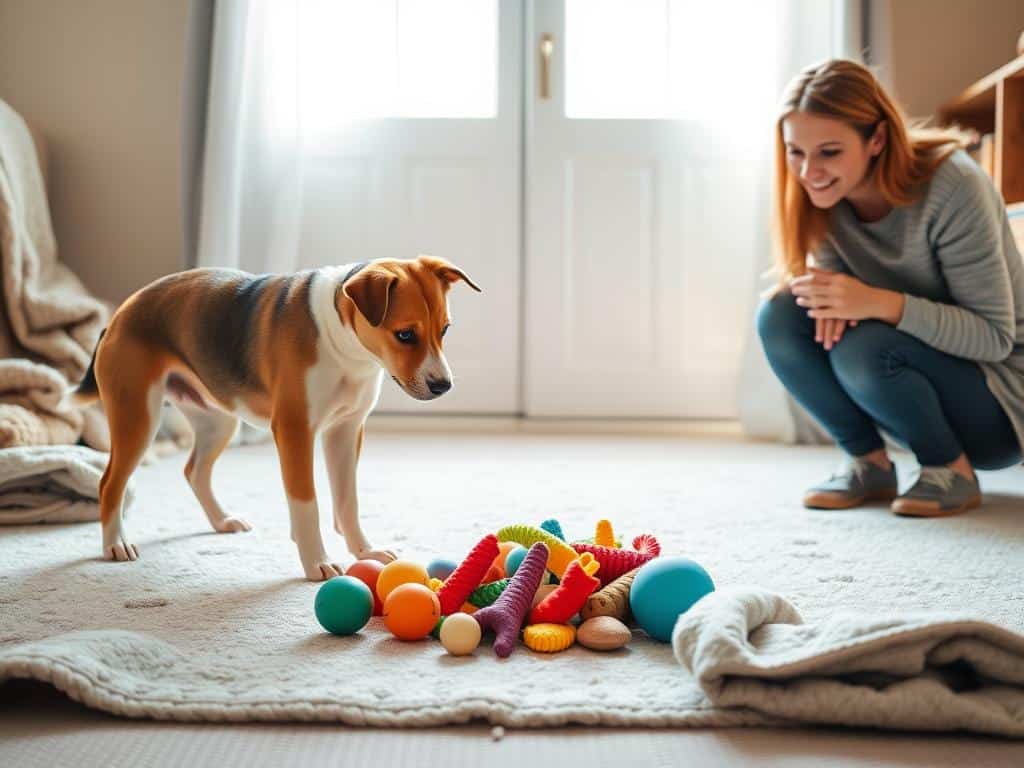
I watched my friend’s dog, Bella, hide at the sound of a doorbell. It broke my heart to see such a beautiful dog afraid. Many pets are like Bella, scared because of past experiences or genetics. They need love and patience from their owners.
With the right approach, these pets can see the world differently. A nurturing environment and effective training can help. This way, fear turns into confidence, and pets can live happier lives.
Understanding their fears and using positive reinforcement helps a lot. It lets pets enjoy life more, making their relationships with humans better.
Key Takeaways
- Fear in pets can stem from various sources, including genetic factors and lack of exposure.
- Timid animals can progressively improve through time, tailored training, and building trust.
- Desensitization and counter-conditioning techniques are essential for helping fearful pets.
- Creating a safe environment allows fearful pets to retreat and feel secure.
- Utilizing positive reinforcement to encourage engagement can significantly enhance confidence.
- Understanding and logging a pet’s triggers is critical for effective behavior management.
- Interaction-based training fosters trust and respect for a pet’s personal space.
Understanding Fearful Pets and Their Behavior
Fearful pets show different behaviors due to various reasons. Knowing these reasons helps pet owners meet their pets’ needs better. Timid animals often react to certain situations because of past traumas or lack of socialization. For instance, puppies that miss socialization between 3 to 14 weeks may become fearful adults.
By understanding these triggers, I can create a supportive environment for my pets. This helps them feel more at ease and secure.
Common Causes of Fear in Pets
Several factors can cause fear in pets. Some may have faced abuse or neglect, while others might be genetically more anxious. Lack of exposure to new things can also make pets fearful of strangers or new places.
I noticed my dog was scared of loud noises or sudden movements. Knowing these triggers helps me manage their interactions better. I make sure they feel comfortable and confident.
Signs of Fear and Anxiety
It’s important to recognize when pets are anxious. I’ve seen my pet tremble, cower, or even growl in scary situations. They might avoid eye contact, pant a lot, or try to run away.
Scolding a fearful pet can make things worse. Instead, I create a calm space where they feel safe. This lets them express their fears without being judged.
Effective Strategies for Helping Fearful Pets
Helping fearful pets needs a careful plan. The first step is to create a safe space for them. This area should be a place where pets feel safe and calm, away from scary things.
By keeping their environment calm and following a daily routine, pets feel more secure. This helps them gain confidence.
Creating a Safe Environment
I set up a special area in my home for my pets. It’s filled with their favorite toys and blankets. This spot helps them relax when they’re feeling stressed.
Some pets, like dogs who like to hide, really appreciate this space. It gives them a place to feel safe when things get too much.
Gradual Desensitization Techniques
Gradual desensitization is important for my pets. It means slowly getting them used to things that scare them. I start with small steps, making sure they’re comfortable.
For example, if my dog is scared of strangers, I let them watch a calm person from far away. I give them treats for being brave. This helps them learn to feel okay around strangers.
Counter-Conditioning Methods
Counter-conditioning helps my pets feel better by replacing fear with positive feelings. When they see something that scares them, I give them treats. This teaches them that good things happen when they face their fears.
Over time, this can change how they feel. It helps them feel more confident and calm.
Training and Enrichment Activities
Training and fun activities are key for my pets. Positive reinforcement training builds trust. It shows them that being good gets them rewards.
I love doing things like puzzle toys and scent games with them. These activities keep their minds busy and help them feel more confident. Socializing them in a safe way also helps them feel more at ease.
Conclusion
Understanding what fearful pets need is key to their happiness. We must recognize the causes of fear and the signs of anxiety. As pet owners, we are vital in helping them overcome their fears.
Building confidence in timid pets requires patience and empathy. Each pet is unique, so we must pay close attention to their behavior. Positive techniques like gradual desensitization help create a supportive environment.
Many pets face challenges, like fear during their adolescent years. For example, only one in five dogs becomes a fully trained service dog. This shows how important it is to build their self-esteem and resilience.
We should aim for our pets to be happy and confident family members. Sometimes, we need professional help from vets and trainers. With proactive steps, we can help our pets overcome their fears and become loving companions.















+ There are no comments
Add yours