
I remember the first time I tried to teach my Labrador, Max, the “sit” command. We were at the park, surrounded by distractions. Other dogs barked, kids played, and delicious food smells filled the air. It was overwhelming, but I was determined to teach him.
With treats in my pocket, I called Max over and started training. The first command is always hard, but Max quickly understood. He learned to sit and we formed a strong bond. Our walks became filled with joy and good behavior.
Today, I want to share easy pet training tricks. These will help you on the journey of dog obedience training. Your furry friends will be not just cute but also well-mannered.
Key Takeaways
- Starting with the “sit” command lays a solid foundation.
- The “stay” command helps keep your dog secure and in one place.
- Learning the “come” command ensures your pet’s safety and recall ability.
- Training your dog to “leave it” can prevent them from consuming harmful items.
- Consistency and positive reinforcement play vital roles in successful dog obedience training.
Understanding Pet Obedience
Training pets is key to being a good pet owner. It makes the bond between dogs and their owners stronger. A well-trained pet is safer and more disciplined in different places.
Consistent practice is important. It stops bad behaviors and makes pets more confident.
The Importance of Obedience Training
At the DogBone Handlers Workshops in Wisconsin, 40 dogs and handlers learned together. They learned the value of repeating and being consistent. This helps build good habits.
Training teaches dogs to listen and understand their owners better. It’s not just about commands. It’s about building trust and understanding.
Benefits of Teaching Tricks
Teaching tricks adds fun to training. It makes dogs more eager to learn and listen. I’ve seen how tricks boost a dog’s confidence and strengthen the bond with their owner.
Every trick learned is a step towards a happier, more well-rounded pet. It’s not just about obedience. It’s about making pets happy and well-adjusted.
Effective Techniques for Training Your Pet
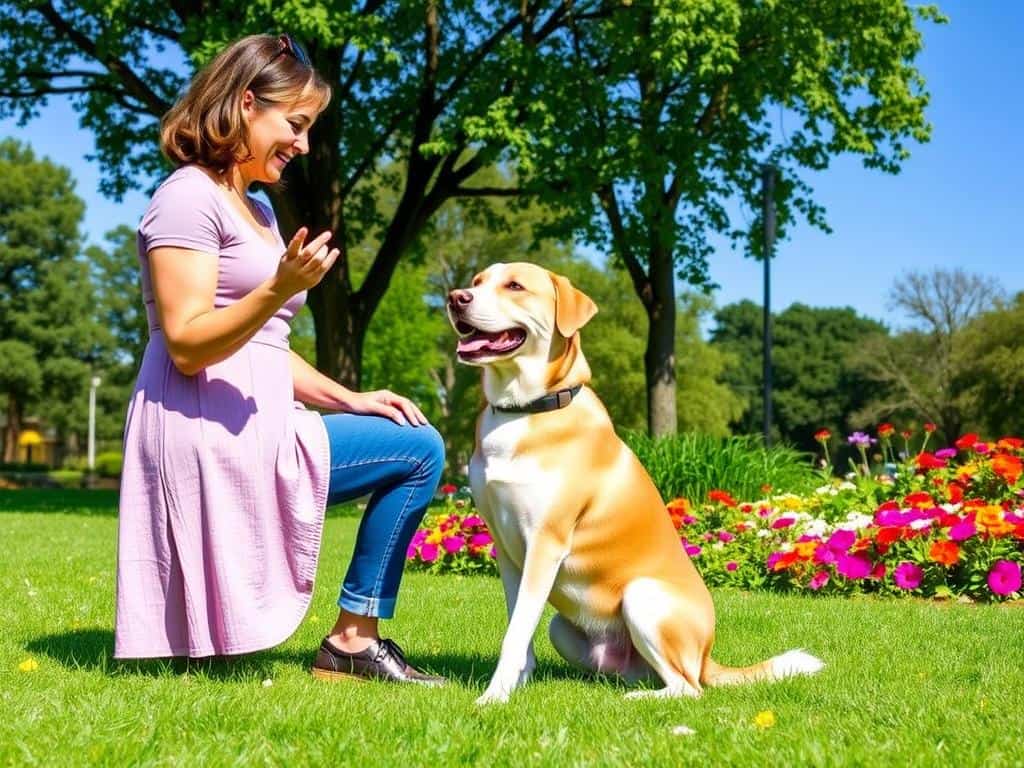
When it comes to dog training, using the right methods makes a big difference. Positive reinforcement helps my dog learn important commands in a fun way. It makes training a positive experience for both of us.
Using Positive Reinforcement
Positive reinforcement is key to successful dog training. It rewards good behavior, making my dog want to do it again. I use treats, praise, and extra playtime to encourage them.
The American Kennel Club suggests keeping training sessions short. This keeps my dog focused and prevents them from getting overwhelmed. Consistency in training is also important for the best results.
For harder commands like “stay,” I break them down into smaller steps. This helps my dog understand each part before moving on. It makes training more effective.
Essential Commands to Teach Your Pet
Teaching basic commands is the first step to a well-trained pet. I start with “sit,” “down,” “stay,” and “come.” These commands are the foundation for more advanced training later on.
Having the right training supplies is also important. Tools like clickers help me reward my dog at the right time. This makes training more effective and fun for them.
Socialization is also key for my dog’s happiness and behavior. Group classes or private lessons with professional trainers are great. They offer valuable insights and help with successful training.
I believe in continuous training throughout my dog’s life. Learning is a journey, not a one-time event. With these techniques, I can help my dog become more obedient and strengthen our bond through positive interactions.
Conclusion
Looking back on 20 years of pet obedience training, it’s clear how much it has improved our bond. It also makes our pets well-behaved. Learning to discipline and train pets safely and enjoyably is key.
Positive reinforcement and teaching basic commands help pets be happy and well-adjusted. This approach builds a strong, respectful relationship between us.
Dog training is not one-size-fits-all. Different methods like clicker training and positive-only techniques work for different dogs. Getting help from experts ensures the training fits my dog’s needs.
Positive reinforcement has turned my dog into a model of good behavior. Training classes help dogs socialize and solve problems like barking and jumping. These skills last a lifetime, making our bond stronger.
Committing to pet training makes pets happier and our lives together richer. It’s a journey that brings joy and understanding to our relationship.














+ There are no comments
Add yours