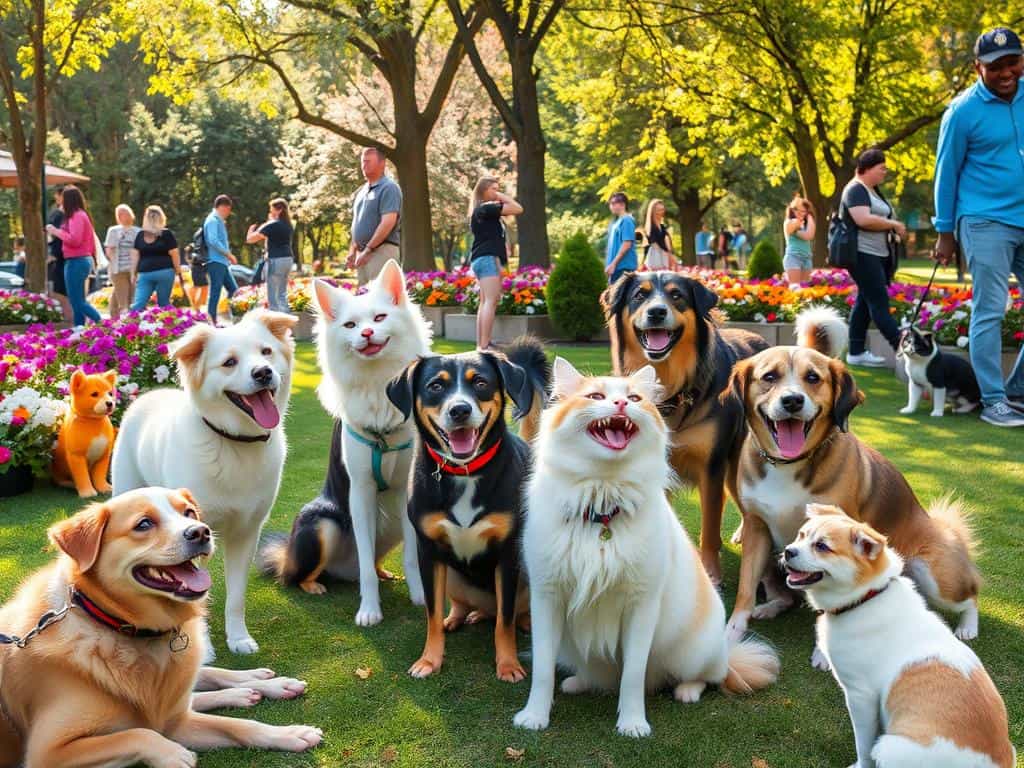
I remember the first time I took my puppy, Bella, to a pet park. It was early spring, and the air was filled with playful sounds. Bella, just 10 weeks old, was bursting with energy, ready to make friends.
She approached other dogs with caution, her tail wagging but her body unsure. This moment made me understand how vital socialization is for pets. Well-socialized pets were confident and happy, showing the joy of diverse experiences.
Every wag of Bella’s tail and bark showed me the value of new experiences. They prevent fear and anxiety, making pets happy and well-adjusted.
The time for effective socialization is short. Puppies need it from 7 to 16 weeks, while kittens from 4 to 16 weeks. These periods are when they learn social behaviors best.
Socialized pets are less destructive and more resilient. They have fewer accidents at home and enjoy travel more. Watching Bella play with others filled me with joy, showing the benefits of socialization.
Key Takeaways
- Optimal socialization for puppies occurs between 7 and 16 weeks of age.
- Cats benefit from socialization from 4 to 16 weeks, though their window is shorter.
- Socialized pets demonstrate happier, more well-adjusted behaviors.
- Proper socialization aids adaptability during travel and boarding.
- Inadequate socialization may lead to destructive behavior, bites, or house soiling.
- Ongoing socialization throughout the first year is necessary for dogs.
The Importance of Pet Socialization
Socialization is key for pets to behave well in social settings. It helps them learn to interact without fear. This way, pets become confident and less likely to be aggressive or anxious.
It’s the first step to raising happy and healthy pets.
Understanding Pet Behavior in Social Settings
Puppies have a special time for socialization before they are four months old. It’s important to introduce them to new people, pets, and places. This early exposure helps them behave better as they grow.
They learn to handle different social situations. This reduces the risk of behavioral problems later on.
Impact on Overall Health and Well-being
Socialization is vital for a pet’s health and happiness. It helps them feel less anxious and enjoy fear-free experiences. Being social keeps them mentally and physically active.
This improves their life quality. Well-socialized pets avoid stress-related health issues. They live happier, more fulfilling lives.

Ways to Facilitate Pet Socialization
Helping pets get along with others involves several key steps. Early socialization is very important. It shapes how pets react to new things in life. It’s best to start these activities when pets are young.
Early Socialization Practices
Puppies need socialization from 3 to 14 weeks old. Kittens should start from 3 to 9 weeks. Taking them to puppy playdates or classes is great. It lets them meet new sights, sounds, and people.
But, it’s important to keep them safe. Unvaccinated pets should stay away from places where they might get sick.
Activities to Promote Socialization
There are many ways to help pets become social. Taking them to dog parks or for walks is good. It lets them try new things.
Try different routes or make noise to help them get used to new sounds. Playing with other pets teaches them how to behave. This makes them well-adjusted and friendly.
Creating Positive Experiences
It’s important to make pets feel safe and happy. Reward them when they act calm or playful. This helps them learn good behavior.
Watch how they interact with others. This helps them understand social cues. Positive experiences make pets confident in new situations.
Conclusion
Getting a pet well-socialized starts early. It’s key for their happiness and health. From 3 to 14 weeks, I made sure my pets met new places and people.
Positive interactions help them grow up well-adjusted. Social pets are more confident and less stressed. They enjoy family outings and gatherings more.
Socialization never stops. I’ve signed my pets up for classes and introduced them to other animals carefully. This has made them happier and more adaptable.
















+ There are no comments
Add yours